



What's Happening?
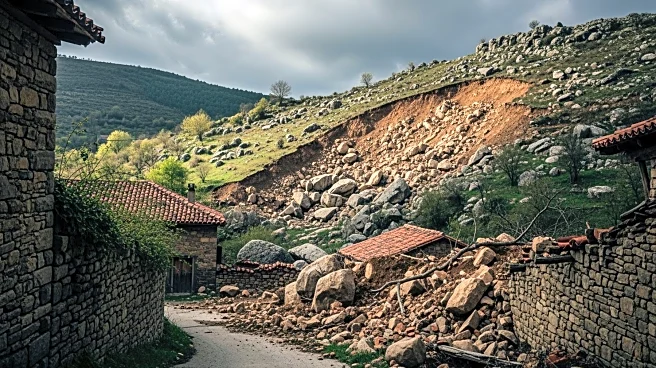
A severe landslide has struck the southern Sicilian village of Niscemi, following days of heavy rain from Cyclone Harry. The landslide has resulted in the collapse of several houses and the evacuation of 1,500 residents. The affected area spans 2.5 miles,
with some structures and vehicles having already fallen 65 feet off a cliff. The ground remains unstable, prompting authorities to warn that residents may need to find long-term housing solutions. The federal government has declared a state of emergency for the region and allocated $120 million for initial relief efforts, although local officials estimate the damage at $2.4 billion. Niscemi, built on layers of sand and clay, has a history of landslides, with a significant event occurring in 1997.
Why It's Important?
The landslide in Niscemi highlights the ongoing challenges faced by communities built on geologically unstable land. The immediate impact includes the displacement of residents and significant property damage, which will require substantial financial resources for recovery. The situation underscores the need for improved urban planning and infrastructure resilience in areas prone to natural disasters. The event has also sparked political debate over past construction decisions and the adequacy of current emergency responses. The broader implications include potential changes in regional policies regarding land use and disaster preparedness, which could affect future development and safety regulations.
What's Next?
Authorities are working to find permanent relocation solutions for affected families, as the current land conditions make it unsafe for residents to return. The regional government, led by President Renato Schifani, is focusing on immediate relief efforts while addressing long-term infrastructure and safety concerns. The situation may lead to increased scrutiny of construction practices in landslide-prone areas and could prompt legislative changes to prevent similar incidents. The federal and regional governments will likely continue to assess the damage and allocate additional resources as needed to support recovery and rebuilding efforts.
Beyond the Headlines
The landslide in Niscemi raises questions about the ethical responsibilities of urban planning in areas with known geological risks. The event may lead to a reevaluation of construction permits and zoning laws to prevent future disasters. Additionally, the incident highlights the importance of integrating scientific research into policy-making to enhance community resilience against natural hazards. The political discourse surrounding the landslide could influence public opinion and voter priorities in upcoming elections, potentially affecting the political landscape in Sicily and beyond.