



What's Happening?
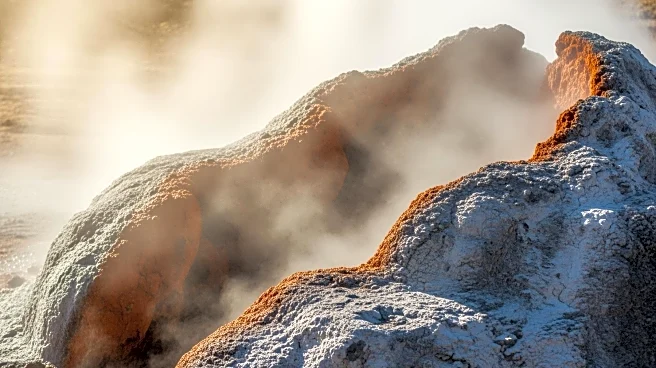
Yellowstone National Park's Echinus Geyser, the largest acidic geyser on Earth, has erupted for the first time since December 2020. This unexpected activity began on February 7, 2026, after nearly six years of dormancy, with subsequent eruptions occurring
on February 9, 12, and 15. The geyser's eruptions, which can reach heights of 20 to 30 feet, are characterized by their unique acidic water composition, which results in distinct mineral formations. The U.S. Geological Survey (USGS) has noted that the geyser's activity intensified on February 16, with eruptions happening every two to five hours. However, the last recorded eruption was on February 24, and it remains uncertain if this activity will continue into the summer months.
Why It's Important?
The reawakening of Echinus Geyser is significant as it highlights the dynamic nature of Yellowstone's geothermal features. The geyser's acidic eruptions are rare and provide valuable insights into the park's hydrothermal systems. This event could attract increased tourism to Yellowstone, benefiting local economies. However, the unpredictability of the geyser's activity poses challenges for park management and visitor safety. Understanding these geothermal phenomena is crucial for scientists studying volcanic and geothermal activity, as well as for park officials tasked with ensuring the safety and enjoyment of visitors.
What's Next?
While the current activity of Echinus Geyser is unlikely to persist long-term, the Norris Geyser Basin's shifting nature means future eruptions cannot be ruled out. Park officials and scientists will continue to monitor the geyser closely to understand its behavior and potential impacts on the surrounding environment. Tourists and researchers alike will be keen to observe any further activity, which could provide additional data on geothermal processes. The USGS and park authorities may also consider implementing measures to manage increased visitor interest and ensure safety around the geyser.