





What's Happening?
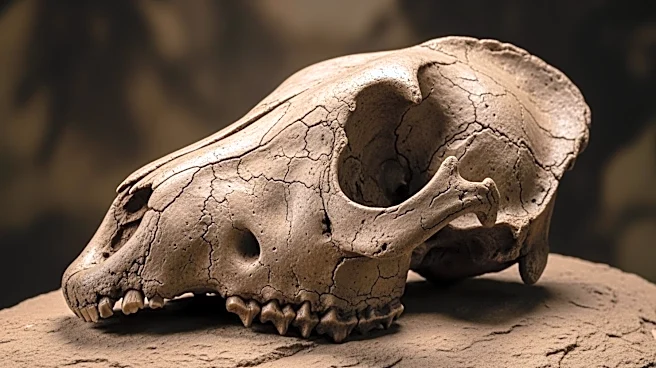
Researchers have identified a massive rodent species, Josephoartigasia monesi, that lived in South America millions of years ago. This species, weighing around 480 kilograms, is the largest rodent ever discovered. Initially described in 2008 from a skull
found in Uruguay, the rodent's size was revised in a 2022 study, correcting earlier estimates that placed its weight between 468 and 2,586 kilograms. The rodent's powerful bite, capable of generating up to 4,165 Newtons, suggests it had a specialized diet, likely involving tough vegetation. Despite its size and strength, J. monesi was a herbivore, using its incisors for digging and possibly defense.
Why It's Important?
The discovery of Josephoartigasia monesi provides significant insights into the evolutionary history of rodents and their ecological roles. Understanding the adaptations of such large rodents can inform scientists about the environmental conditions and ecological niches of prehistoric South America. This research also highlights the diversity of mammalian life in the past, offering a broader perspective on how current ecosystems have evolved. The study of J. monesi's anatomy and behavior can contribute to the knowledge of how large herbivores adapt to their environments, which is crucial for understanding both past and present biodiversity.