




What's Happening?
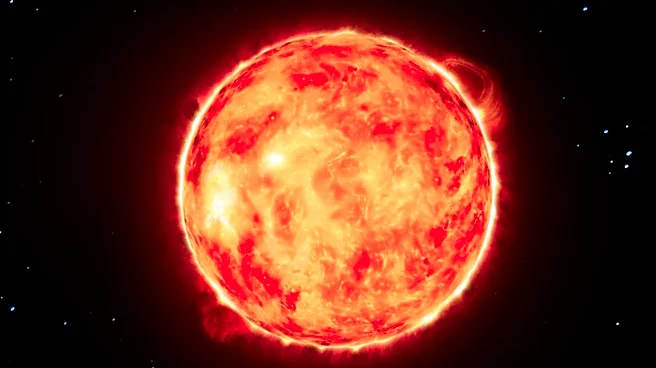
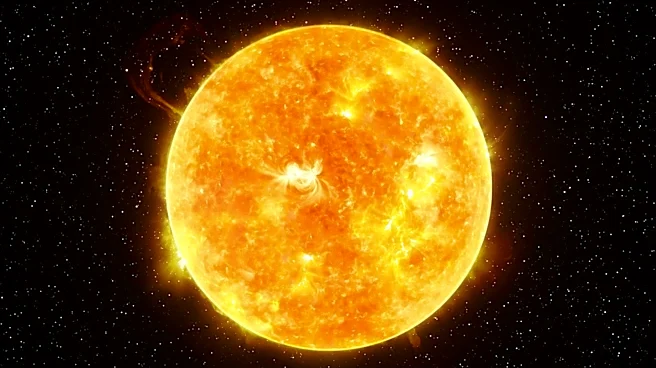
A recent study published in Astronomy & Astrophysics has revealed that the Sun contains 55 percent more silver than previously estimated. This discovery was made possible through a new, more detailed model for interpreting solar light, which allows scientists
to better understand the composition of the Sun's atmosphere. The study, conducted by an international team of researchers, utilized a supercomputer to apply a 3D model of the Sun and its light output, leading to a more accurate interpretation of how silver atoms interact with solar rays. This finding aligns the silver content in the Sun more closely with that found in ancient meteorites, which were formed at the same time as the Sun, approximately 4.6 billion years ago.
Why It's Important?
The increased understanding of the Sun's silver content has significant implications for the study of stellar evolution and the chemical history of the Milky Way. By accurately determining the amount of silver in the Sun, scientists can trace the chemical evolution of the galaxy and gain insights into the formation and distribution of elements in the universe. This knowledge is crucial for understanding the lifecycle of stars and the processes that occur during their formation and death. Additionally, the Sun serves as a key reference point in astronomy, and this new data can help refine models of other stars and cosmic materials.
What's Next?
Researchers plan to apply the improved model to other stars to further explore the distribution of silver and other elements in the universe. Future observations and data collection, such as those from the SUNRISE UV Spectropolarimeter and Imager, will help refine the model and improve the accuracy of these findings. This ongoing research aims to enhance our understanding of the Milky Way's expansion and the chemical processes that have shaped the cosmos over billions of years.