






What's Happening?
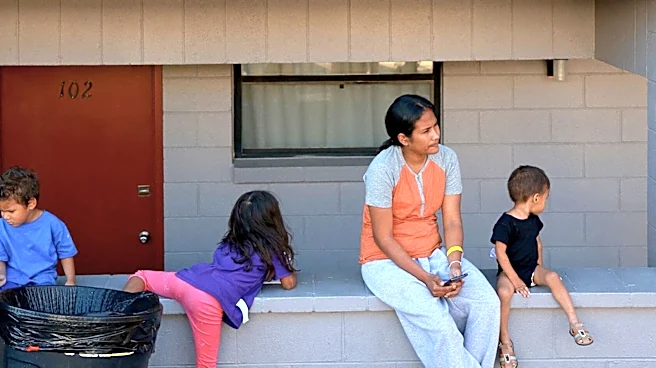
Residents of Park Place Apartments in Lynchburg, Virginia, are continuing to experience significant fallout following a water crisis that left many without reliable water service. While water has been restored, some tenants, like Jessica Graham and her
three children, remain displaced from their original units. Graham's family was moved into a model unit that lacked essential amenities such as air conditioning and functional appliances. This displacement occurred despite other affected residents being relocated to hotels. The water issues, including multiple leaks, caused extensive flooding in units, leading to the destruction of thousands of dollars worth of food and furniture in Graham's apartment. The city had previously threatened Greenbrier Management, the property owner, with a takeover if water service was not restored by a Friday deadline, which was met on Thursday night.
Why It's Important?
This situation highlights critical issues in tenant rights and property management accountability, particularly concerning vulnerable populations like single mothers and their children. The lack of adequate temporary housing and compensation for damages places an immense burden on affected families, potentially leading to long-term financial and emotional distress. It also underscores the challenges faced by local governments in enforcing housing standards and ensuring resident safety and well-being when property owners fail to maintain habitable conditions. The disparity in treatment, where some residents received hotel accommodations while others did not, raises questions about equitable support during crises and the potential for discrimination. This event could prompt increased scrutiny of landlord responsibilities and tenant protection laws in Virginia and potentially influence broader discussions on housing security and emergency response protocols for residential complexes.
What's Next?
The city of Lynchburg is expected to continue monitoring the Park Place Apartments complex as a third party works to repair damaged units. Residents like Jessica Graham will likely seek further recourse for the damages incurred and the unsuitable living conditions they have faced. This could involve legal action against Greenbrier Management for negligence and failure to provide habitable housing. The incident may also lead to calls for stronger tenant advocacy and potentially new local ordinances or state legislation aimed at preventing similar situations and ensuring more robust protections for residents during housing crises. Property management companies in the region might face increased pressure to review and improve their emergency response plans and maintenance protocols to avoid similar public and regulatory backlash.
Beyond the Headlines
The ongoing struggles of residents at Park Place Apartments reveal deeper societal issues related to housing inequality and the power imbalance between tenants and large property management firms. The emotional toll described by Jessica Graham, feeling "disrespected, disregarded," points to a systemic problem where basic human needs are overlooked in favor of property interests. This incident could serve as a catalyst for community organizing among tenants, fostering a collective voice to demand better living conditions and accountability. Furthermore, it brings to light the ethical responsibilities of property owners to provide safe and dignified housing, even in the face of infrastructure failures. The long-term psychological impact on children displaced and living in substandard conditions, as well as the financial strain on single-parent households, represents a significant, often unaddressed, consequence of such crises.