


What's Happening?
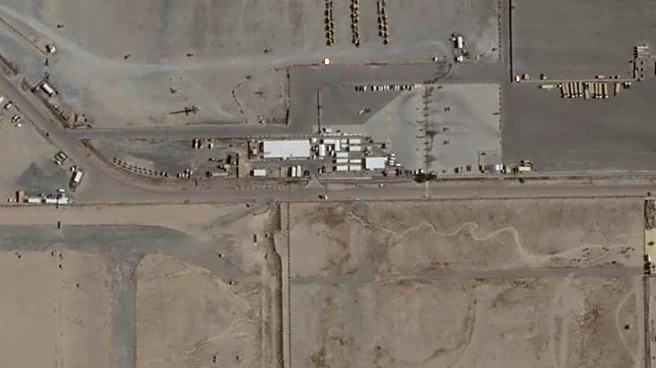
The Pentagon has confirmed the deaths of several U.S. military service members during Operation Epic Fury in Port Shuaiba, Kuwait. The operation, which took place on March 1, 2026, involved an unmanned aircraft system attack. Among the identified casualties
are Sgt. 1st Class Noah L. Tietjens, Maj. Jeffrey R. O'Brien, Capt. Cody A. Khork, Sgt. Declan J. Coady, and Sgt. 1st Class Nicole M. Amor. The Pentagon is still in the process of positively identifying all casualties, with Chief Warrant Officer 3 Robert M. Marzan among those believed to be deceased. The operation highlights the ongoing risks faced by U.S. military personnel deployed overseas.
Why It's Important?
The loss of U.S. service members in Operation Epic Fury underscores the dangers associated with military operations in volatile regions. This incident may impact U.S. military strategy and deployment decisions in the Middle East, as well as influence public opinion on military engagements abroad. The operation's casualties could lead to increased scrutiny of military tactics and the use of unmanned systems in combat zones. Additionally, the incident may prompt discussions on the support and resources provided to military personnel and their families, emphasizing the need for comprehensive care and benefits for those serving in high-risk areas.
What's Next?
As the Pentagon continues to identify and notify the families of the fallen service members, there may be calls for a review of the operation's circumstances and the strategic objectives in Kuwait. The U.S. military might reassess its engagement rules and the deployment of unmanned systems to mitigate future risks. Furthermore, the incident could lead to congressional inquiries or hearings to evaluate the effectiveness and safety of current military operations in the region. The outcome of these discussions could influence future military policies and the allocation of resources for overseas operations.