



What's Happening?
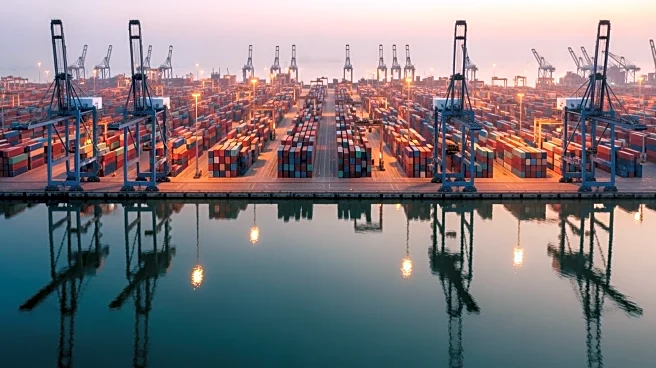
Shanghai International Port Group has maintained its position as the world's busiest container port for the 16th consecutive year, handling 55.06 million TEUs in 2025. This marks a 6.9% increase from the previous year. Despite this achievement, both Shanghai and Singapore,
the second busiest port, are facing what is termed a 'Complexity Trap.' This refers to the challenges of maintaining schedule reliability amidst increasing network complexity. The ports are struggling to surpass a 60% reliability threshold, indicating operational limits despite high connectivity.
Why It's Important?
Shanghai's continued dominance as a global shipping hub underscores its critical role in international trade. The port's ability to handle record volumes is vital for global supply chains, particularly as economies recover from pandemic disruptions. However, the 'Complexity Trap' highlights the need for ports to innovate and improve operational efficiency to maintain reliability. This situation could prompt investments in technology and infrastructure to enhance port operations, impacting global trade dynamics and logistics strategies.
What's Next?
To address the 'Complexity Trap,' ports like Shanghai may need to adopt advanced technologies and optimize logistics processes. This could involve investments in automation, data analytics, and infrastructure upgrades. Stakeholders, including shipping companies and logistics providers, will be watching closely to see how these ports adapt to growing demands. The outcome could influence global shipping routes and strategies, affecting trade flows and economic activities worldwide.