








What's Happening?
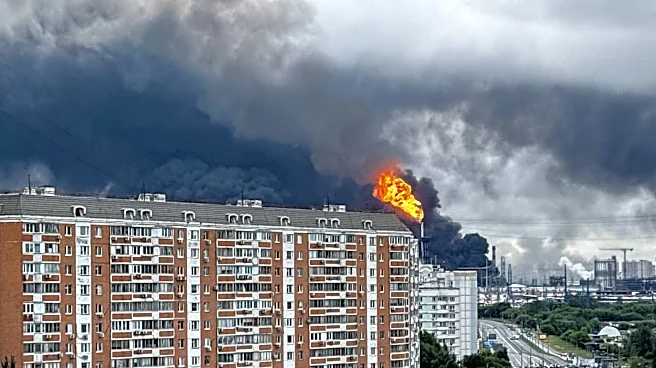
Russia's oil refining output has plummeted to its lowest level in 21 years, with a significant drop of over 60% in crude processing rates. According to Energy Aspects, Russia's crude processing rate fell to 3.91 million barrels per day in July 2026, a decrease
of more than 1.4 million barrels per day from the previous year's average. This decline is attributed to intensified Ukrainian strikes on Russian oil refineries, which have reportedly disabled 42.7% of Russia's total projected oil refining capacity. The strikes have targeted at least 24 of Russia's 34 large refineries, including a significant attack on the Omsk refinery, Russia's largest. The ongoing attacks have led to a severe fuel crisis in Russia, with nationwide fuel rationing and reports of long queues and confrontations at gas stations.
Why It's Important?
The drastic reduction in Russia's oil refining capacity has significant implications for both the Russian economy and the broader geopolitical landscape. The fuel crisis exacerbates existing economic challenges within Russia, potentially leading to increased domestic unrest and pressure on the government. The situation also highlights the effectiveness of Ukraine's military strategy in targeting critical infrastructure, which could shift the dynamics of the ongoing conflict. Additionally, the crisis may force Russia to seek alternative fuel sources, such as imports from India and Kazakhstan, altering trade relationships and economic dependencies. The impact on global oil markets could also be substantial, affecting prices and supply chains worldwide.
What's Next?
In response to the fuel crisis, Russia has implemented export bans on gasoline, jet fuel, and diesel, and is reportedly in talks to import gasoline from other countries. These measures indicate a strategic shift in Russia's approach to managing its domestic fuel supply. The ongoing conflict and Ukraine's continued targeting of Russian infrastructure suggest that further disruptions in oil refining and supply are likely. The international community will be closely monitoring these developments, as they could influence diplomatic negotiations and potential resolutions to the conflict. Additionally, the situation may prompt further military and economic responses from both Russia and Ukraine.