









What's Happening?
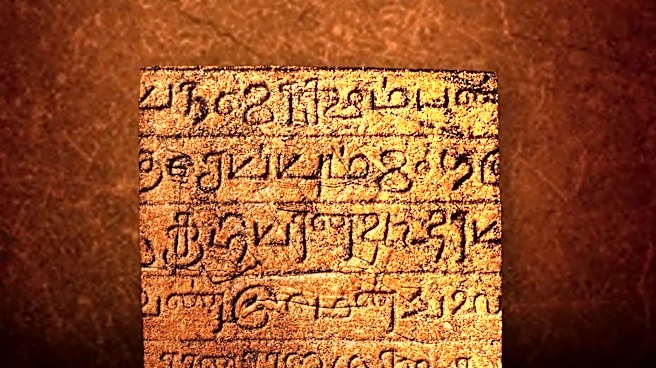
A joint Iraqi-American archaeological team has discovered a fragment of an ancient stele dating back 2,600 years to the reign of Assyrian King Ashurbanipal at the Bab Shamash site in Iraq's Nineveh province. The stele, which stands two meters high and 1.55
meters wide, features a high-relief sculpture of Ashurbanipal on the front and two smaller reliefs of unnamed Assyrian kings on the back. Cuneiform inscriptions on the stele document the king's architectural achievements in Nineveh and the broader Assyrian Empire. The discovery was announced by the Nineveh Antiquities Inspectorate and Iraq’s Antiquities and Heritage State Board. The stele has been moved to the Inspectorate’s headquarters for restoration and further study.
Why It's Important?
The discovery of the stele is significant as it highlights the historical and cultural richness of Nineveh, once the capital of the Neo-Assyrian Empire. It underscores the importance of ongoing archaeological efforts in Iraq to uncover and preserve ancient artifacts that provide insights into Mesopotamian civilization. The stele not only commemorates Ashurbanipal's achievements but also reinforces the historical narrative of Assyrian urban development and cultural prosperity. This find contributes to the global understanding of ancient civilizations and their contributions to human history.
What's Next?
The stele will undergo restoration to ensure its preservation and allow for detailed study. This process will likely involve collaboration between local and international experts to analyze the inscriptions and reliefs. The findings could lead to further archaeological explorations in Nineveh, potentially uncovering more artifacts that shed light on the Assyrian Empire's history. The restoration and study of the stele may also enhance Iraq's cultural heritage tourism, attracting scholars and tourists interested in ancient history.
Beyond the Headlines
The discovery of the stele reflects broader efforts to preserve Iraq's archaeological heritage amid challenges such as climate change and political instability. The restoration of ancient sites like the Ziggurat of Ur, mentioned in related reports, highlights Iraq's commitment to safeguarding its historical landmarks. These efforts are crucial for maintaining cultural identity and promoting international recognition of Iraq's rich historical contributions.