



What's Happening?
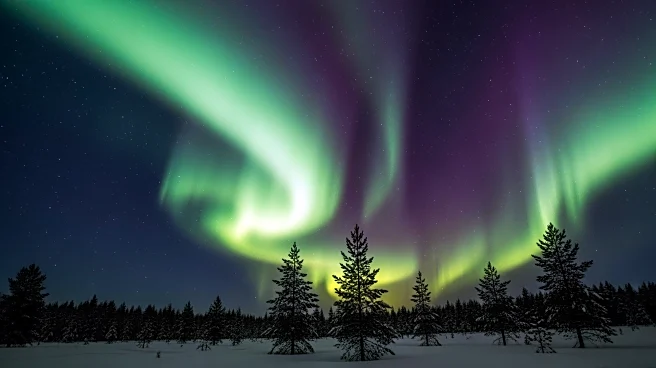
March is considered one of the best months to observe the northern lights, or aurora borealis, due to increased geomagnetic activity around the spring equinox. This phenomenon occurs when energetic particles from the sun collide with Earth's atmosphere,
creating stunning light displays. The spring equinox, occurring on March 20, aligns Earth's magnetic field in a way that allows more solar wind to penetrate, enhancing auroral activity. This period coincides with heightened solar activity as the sun moves past the peak of its 11-year cycle, further boosting the chances of witnessing the auroras.
Why It's Important?
The increased visibility of the northern lights in March provides a unique opportunity for both amateur and professional aurora chasers. The phenomenon not only offers a spectacular natural display but also serves as an indicator of solar and geomagnetic activity, which can have broader implications for understanding space weather and its effects on Earth. The heightened activity during this period can also impact satellite operations and communications, making it a point of interest for scientists and industries reliant on space-based technologies.
What's Next?
Aurora enthusiasts are encouraged to take advantage of the optimal viewing conditions in March, particularly in high-latitude regions like Alaska, northern Canada, and Scandinavia. The longer nights and clear skies typical of early spring provide ideal conditions for aurora hunting. As solar activity remains elevated, the potential for strong auroral displays continues, offering ongoing opportunities for observation and study.