



What's Happening?
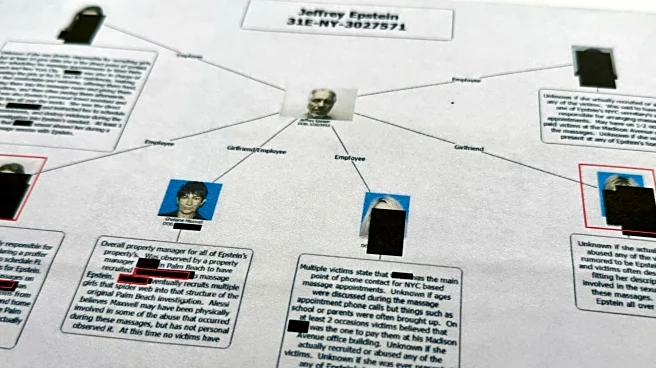
The U.S. Department of Justice (DOJ) has released heavily redacted files related to Jeffrey Epstein, following a congressional mandate under the Epstein Files Transparency Act. The release, which includes thousands of documents, has sparked controversy
due to the extensive redactions, including a 100-page file that is entirely blacked out. The DOJ has justified the redactions by citing the need to protect personal information of victims, ongoing investigations, and national security concerns. Despite these explanations, the redactions have drawn criticism from lawmakers, including Representatives Thomas Massie and Ro Khanna, who argue that the DOJ has not fully complied with the transparency requirements of the Act. The files include photographs of Epstein with notable figures such as former President Bill Clinton, Mick Jagger, and Michael Jackson, with some images partially redacted.
Why It's Important?
The release and subsequent redactions of the Epstein files are significant as they touch on issues of transparency and accountability within the U.S. justice system. The Epstein case has been a focal point of public interest due to its implications involving high-profile individuals and allegations of sex trafficking. The DOJ's handling of the files raises questions about the balance between transparency and privacy, as well as the potential shielding of influential figures from scrutiny. The controversy also highlights the challenges in enforcing legislative mandates for transparency, which can impact public trust in government institutions. The outcome of this situation could influence future legislative efforts aimed at increasing transparency in sensitive legal matters.
What's Next?
The DOJ is required to submit a report to the House and Senate Judiciary Committees within 15 days of the release, detailing the categories of records released and withheld, along with a summary of the redactions made. This report is expected to provide further insight into the DOJ's decision-making process regarding the redactions. Lawmakers and the public will be closely monitoring this report to assess whether the DOJ has adhered to the legal requirements of the Epstein Files Transparency Act. The ongoing scrutiny may lead to further legislative or legal actions to ensure compliance and address any perceived shortcomings in the DOJ's transparency efforts.