








What's Happening?
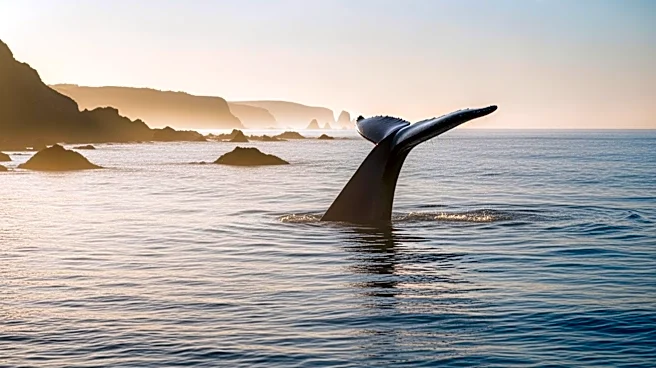
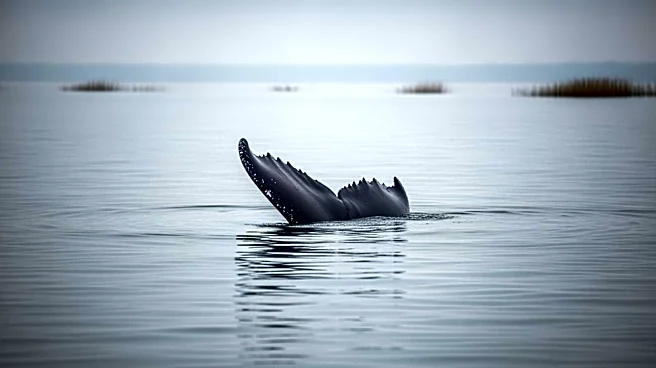
A humpback whale, nicknamed Timmy, is stranded in the shallow waters of the Baltic Sea near Wismar, Germany. Despite multiple rescue attempts, the whale remains in distress, suffering from a skin condition due to the low salt content of the Baltic Sea.
Timmy was first spotted on March 3, far from its natural habitat in the Atlantic Ocean. Experts believe the whale may have lost its way during migration or while chasing a shoal of herring. The situation has garnered significant public attention, with local media livestreaming the whale's plight and activists staging protests. Rescue efforts have included attempts to refloat the whale using police boats and inflatable devices, but these have been unsuccessful.
Why It's Important?
The situation highlights the challenges faced by marine life when they stray from their natural habitats. Timmy's plight has sparked widespread public interest and debate over the best course of action, with some advocating for continued rescue efforts and others suggesting the whale should be allowed to die peacefully. The incident underscores the impact of human intervention on wildlife and raises questions about the ethical considerations of such actions. The whale's distress has also prompted discussions about the environmental conditions of the Baltic Sea and their effects on marine life.
What's Next?
Experts are divided on the next steps, with some suggesting that further rescue attempts may cause additional stress to the whale. The situation remains fluid, with ongoing efforts to guide Timmy back to deeper waters. The public interest in the whale's fate is likely to continue, potentially influencing future policies on marine rescue operations and environmental conservation efforts.