









What's Happening?
The Trump administration's Department of Homeland Security (DHS) is under scrutiny for its handling of Temporary Protected Status (TPS) for approximately 350,000 Haitians and 6,000 Syrians. Following a Supreme Court ruling that allows the administration to
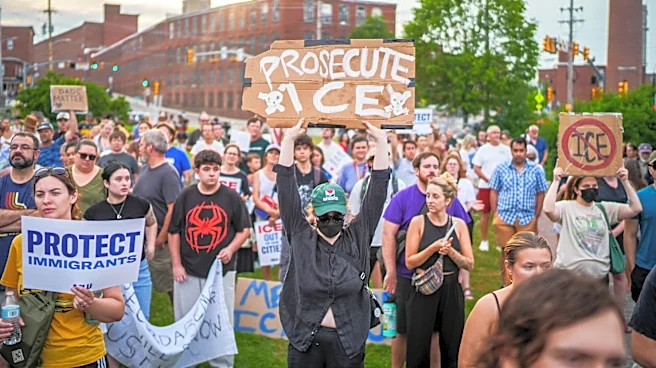
end TPS, DHS Secretary Markwayne Mullin announced a plan offering TPS holders a $2,100 stipend and a plane ticket to self-deport. This move has sparked accusations of 'backdoor amnesty' from within the administration's own ranks. Critics argue that the stipend, coupled with the possibility of applying for other legal statuses, undermines the temporary nature of TPS. The controversy highlights the tension between the administration's immigration policies and the practical implications for TPS holders.
Why It's Important?
The decision to end TPS and offer a self-deportation stipend has significant implications for U.S. immigration policy and the individuals affected. The move could lead to the deportation of thousands, impacting communities and economies both in the U.S. and in the home countries of TPS holders. The criticism from within the administration underscores a broader debate about the balance between enforcing immigration laws and providing humanitarian relief. The controversy also reflects the challenges of managing immigration policy in a politically divided environment, where decisions can have far-reaching social and economic consequences.
What's Next?
As the DHS implements its plan, TPS holders face critical decisions about their future. The administration's approach may prompt legal challenges or legislative responses aimed at addressing the status of TPS holders. Additionally, the political fallout from the controversy could influence future immigration policy debates and the administration's broader agenda. Stakeholders, including immigrant advocacy groups and policymakers, are likely to continue pushing for solutions that balance enforcement with humanitarian considerations.
Beyond the Headlines
The debate over TPS and the self-deportation stipend raises questions about the ethical and legal dimensions of immigration policy. The concept of 'backdoor amnesty' highlights concerns about transparency and accountability in government decision-making. The situation also underscores the complexities of providing temporary protection in a way that aligns with long-term immigration goals. As the U.S. navigates these challenges, the outcomes could shape the country's approach to immigration and its role in addressing global humanitarian crises.