




What's Happening?
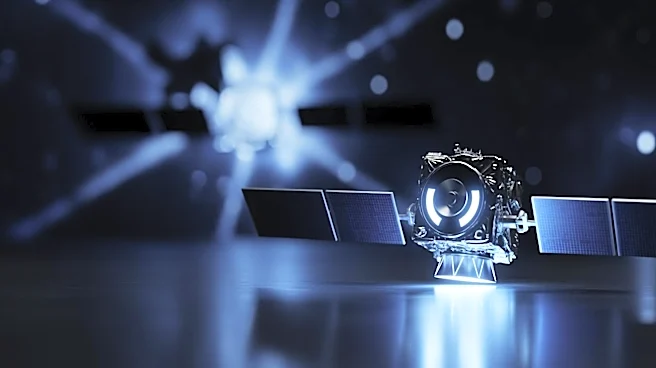
NASA engineers at the Jet Propulsion Laboratory in Southern California have turned off the Low-energy Charged Particles experiment (LECP) on Voyager 1. This decision, made on April 17, 2026, is part of efforts to conserve power as the spacecraft's nuclear
energy source diminishes. The LECP, operational since Voyager 1's launch in 1977, has been crucial in studying low-energy charged particles and cosmic rays. The shutdown is a strategic move to extend the spacecraft's life, allowing it to continue its mission of exploring the interstellar medium. This decision follows a pre-planned sequence of instrument shutdowns agreed upon by the Voyager science and engineering teams.
Why It's Important?
The shutdown of the LECP on Voyager 1 highlights the challenges of maintaining long-term space missions. As the first human-made object to enter interstellar space, Voyager 1 provides unique data about the outer reaches of our solar system. The decision to conserve power by shutting down instruments is crucial for prolonging the spacecraft's operational life, ensuring continued scientific contributions. This move underscores the importance of strategic planning in space exploration, balancing the need for data collection with the limitations of aging technology.
What's Next?
NASA's decision to shut down the LECP is part of a broader strategy to manage Voyager 1's dwindling power supply. The team will continue to monitor the spacecraft's systems and may implement further power-saving measures as needed. The ongoing management of Voyager 1's resources will be critical in maximizing the scientific return from this historic mission. Future decisions will likely involve additional instrument shutdowns, prioritizing the most valuable scientific data collection.