
What's Happening?
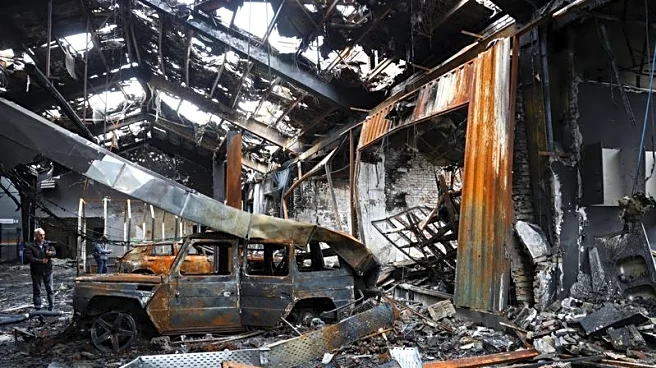
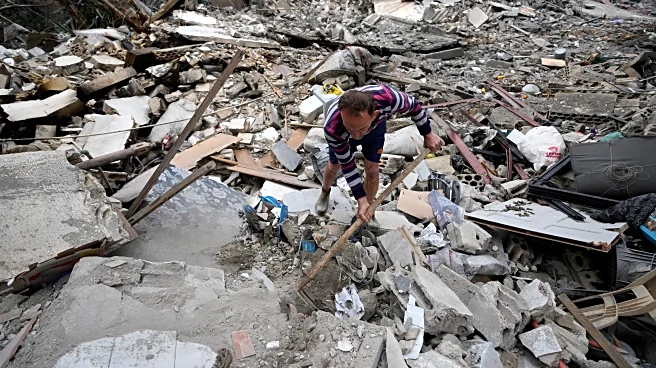
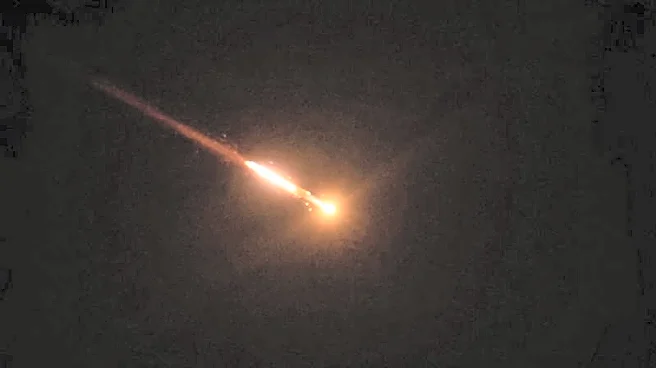
An Iranian attack on Saudi Arabia's Prince Sultan air base has resulted in injuries to more than two dozen American troops, with at least 15 injured in the latest assault. The attack involved six ballistic missiles and 29 drones, marking a significant
escalation in the ongoing conflict. In response, the United States has increased its military presence in the Middle East, deploying additional forces including the USS Tripoli, an amphibious assault ship carrying about 2,500 Marines. This deployment is part of a broader strategy to bolster American military capabilities in the region, which already includes two aircraft carriers and approximately 50,000 troops. The conflict has been ongoing for a month, with the Saudi base being a frequent target due to its strategic importance.
Why It's Important?
The escalation of military activities in the Middle East has significant implications for global security and economic stability. The increased American military presence aims to deter further Iranian aggression and protect strategic interests in the region, particularly the Strait of Hormuz, a critical chokepoint for global oil shipments. The conflict has already disrupted oil exports and caused fuel prices to rise, impacting economies worldwide. The situation also places pressure on President Trump to address Iran's actions and negotiate a resolution to the conflict. The ongoing hostilities highlight the fragile nature of Middle Eastern geopolitics and the potential for broader regional instability.
What's Next?
The United States is likely to continue its military buildup in the region to counter Iranian threats and protect its allies. Diplomatic efforts may intensify as President Trump faces pressure to resolve the conflict and reopen the Strait of Hormuz. The international community will be closely monitoring the situation, as further escalation could lead to more significant economic and security repercussions. The potential for negotiations remains uncertain, with Iran denying any engagement in talks. The outcome of these developments will have lasting effects on U.S. foreign policy and its strategic posture in the Middle East.
Beyond the Headlines
The conflict underscores the complex interplay of military, economic, and diplomatic factors in the Middle East. The U.S. military's ability to limit casualties despite the intensity of Iranian attacks reflects its operational capabilities. However, the broader goal of Iran appears to be inflicting economic pain rather than direct military confrontation. This strategy complicates efforts to achieve a lasting resolution and highlights the challenges of addressing non-traditional security threats. The situation also raises questions about the long-term sustainability of U.S. military commitments in the region and the potential need for a reevaluation of strategic priorities.