






What's Happening?
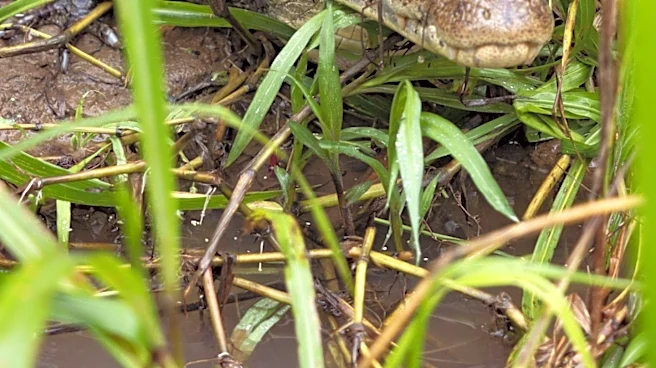
In southwestern Germany, an invasive population of green-and-yellow whip snakes has been expanding from a landfill site near Zweibrücken. Landscape ecologist Hubert Laufer has captured over 300 snakes, but many more remain. The snakes, which likely arrived
in waste around 2017, pose a threat to native species, particularly lizards, which are their preferred prey. The snakes are not dangerous to humans but have disrupted the local ecosystem.
Why It's Important?
The spread of invasive species like the whip snake can have significant ecological and economic impacts. They disrupt local food webs, threaten biodiversity, and can lead to costly management efforts. The situation in Germany highlights the role of waste sites in facilitating the spread of invasive species and underscores the need for effective monitoring and control measures to protect native ecosystems.
What's Next?
Efforts to control the snake population continue, with Laufer and local authorities seeking public assistance in reporting sightings. Captured snakes are being relocated to appropriate facilities. The case may prompt further research into preventing the spread of invasive species and improving waste management practices to reduce ecological risks.
Beyond the Headlines
This incident illustrates the broader challenges of managing invasive species and the unintended consequences of human activities on ecosystems. It also highlights the importance of international cooperation in addressing environmental issues, as invasive species often cross borders and require coordinated responses.