







What's Happening?
Artificial intelligence (AI) has emerged as a significant campaign issue in nearly 40% of the 2026 U.S. House, Senate, and gubernatorial races, according to a Washington Post analysis. Candidates are primarily focusing on the more immediate and tangible
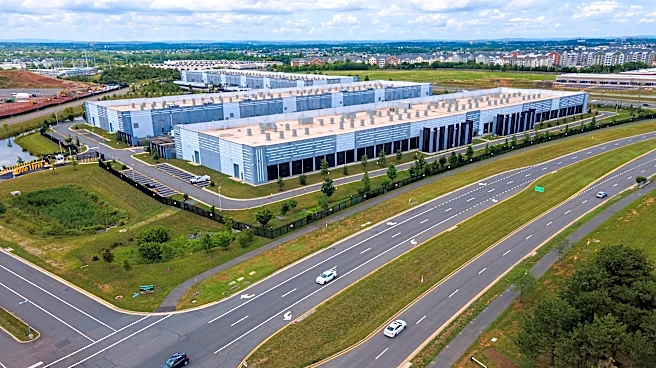
aspects of AI, specifically the infrastructure required for AI data centers, including electricity, water consumption, and land use. The analysis, which reviewed 1,200 campaign websites from candidates still competing as of August 14, found that AI or data-center policy was mentioned more frequently than topics like Israel, manufacturing, or racism. While the presence of AI in campaign materials doesn't necessarily indicate it's a top voter concern or a deciding factor in races, it shows that candidates are actively choosing to address the technology in their public messaging. Data-center opposition is appearing in competitive contests and even in races considered relatively safe, such as the New Jersey House race involving Rep. Frank Pallone Jr.
Why It's Important?
The prominence of AI and data center policy in U.S. election campaigns signifies a growing awareness among politicians of the technology's real-world impacts and voter concerns. This shift indicates that AI is no longer just a futuristic concept but a present-day issue with direct implications for local communities, infrastructure, and the environment. The focus on data centers highlights the tangible costs and benefits associated with technological advancement, such as increased electricity demand, water usage, and potential job creation or displacement. This could lead to new policy debates and legislative efforts at both state and federal levels to regulate the development and operation of AI infrastructure, potentially influencing energy policy, environmental regulations, and economic development strategies. The bipartisan nature of some of these discussions, where candidates from both parties acknowledge job creation while also warning about automation, underscores the complex and multifaceted nature of AI's impact on society.
What's Next?
As AI continues to be a campaign issue, it is likely that candidates will further refine their stances and proposals regarding data center development, energy consumption, and the broader economic and social implications of AI. This could lead to more detailed policy platforms and increased public debate on how to manage the growth of AI infrastructure responsibly. Post-election, the increased focus on AI could translate into legislative action, with potential for new laws or regulations concerning data center siting, environmental impact assessments, and incentives for sustainable AI development. The ongoing discussions could also influence public perception of AI, shifting it from an abstract technological concept to a concrete issue with local and national relevance, potentially leading to greater public engagement and advocacy on AI-related policies.
Beyond the Headlines
The emergence of AI as a campaign issue reflects a deeper societal reckoning with the rapid pace of technological change and its implications for governance and daily life. The focus on data centers, in particular, highlights the often-overlooked physical footprint of the digital world. This raises critical questions about resource allocation, environmental sustainability, and the equitable distribution of the benefits and burdens of technological progress. The political discourse around AI could also shape public understanding and expectations of the technology, influencing how citizens perceive its role in job markets, privacy, and national security. Ultimately, the integration of AI into political campaigns signals a maturing conversation about technology's place in society, moving beyond mere innovation to address its profound ethical, economic, and environmental consequences, and demanding a more proactive approach from policymakers.