






What's Happening?
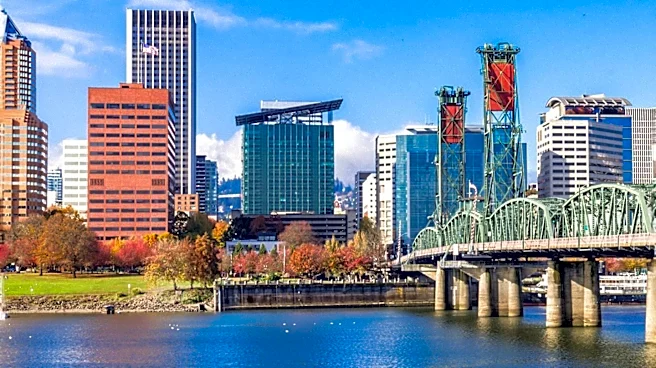
Portland, Oregon, has established itself as a national leader in implementing green stormwater infrastructure (GSI) to manage rainwater runoff. The city's approach integrates natural elements such as rain gardens, ecoroofs, and soil filtration systems
to reduce the volume of stormwater entering its combined sewer system. This initiative is a direct response to a 1991 mandate from the Oregon Department of Environmental Quality, which set a 20-year deadline for Portland to significantly decrease combined sewer overflows. The city's GSI efforts have resulted in a 35% reduction in stormwater volume directed to the combined sewer and the removal of 1.2 billion gallons of stormwater annually through over 56,000 disconnected downspouts. Approximately 40 green street installations are added each year, and property owners can receive up to a 35% discount on their stormwater utility bills through the Clean River Rewards program for maintaining GSI features.
Why It's Important?
Portland's proactive adoption of green stormwater infrastructure offers a significant model for urban centers across the U.S. facing similar challenges with aging infrastructure, stormwater management, and water quality. The integration of natural systems not only mitigates environmental issues like combined sewer overflows and water pollution but also provides economic incentives for residents and contributes to urban greening. By reducing the strain on conventional 'gray' infrastructure, GSI can extend the lifespan of existing systems and potentially defer costly upgrades. The financial incentives for property owners encourage community participation, fostering a shared responsibility for environmental stewardship. This approach demonstrates that sustainable urban development can be achieved through a combination of policy, technological innovation, and community engagement, leading to more resilient and environmentally sound cities.
What's Next?
Portland is expected to continue expanding its green stormwater infrastructure initiatives, with ongoing efforts to add more green street installations and encourage property owner participation in programs like Clean River Rewards. The city's success may inspire other municipalities to adopt similar comprehensive GSI strategies, potentially leading to increased federal and state funding for such projects. Future developments could include further integration of GSI with urban planning and development regulations, making these natural solutions a standard component of new construction and redevelopment. Additionally, there may be a focus on public education and outreach to increase awareness and adoption of GSI practices among residents and businesses, further solidifying Portland's leadership in sustainable urban water management.
Beyond the Headlines
The success of Portland's green stormwater infrastructure highlights a broader shift in urban planning towards nature-based solutions for environmental challenges. This approach moves beyond traditional engineering fixes, recognizing the multi-faceted benefits of integrating ecological processes into urban design. Beyond stormwater management, GSI contributes to urban biodiversity, mitigates the urban heat island effect, and enhances the aesthetic and recreational value of public spaces. The emphasis on community involvement, through programs like 'Adopt a Drain,' also underscores a growing recognition of the importance of citizen participation in maintaining urban ecosystems. This paradigm shift suggests a future where cities are not just built environments but integrated ecological systems, fostering a more harmonious relationship between urban populations and their natural surroundings.