
What's Happening?
Dr. Alfredo Mahar Francisco A. Lagmay, a prominent Filipino scientist and scholar at the University of the Philippines, is advocating for enhanced disaster preparedness in the Philippines, which the 2026 World Risk Report identifies as the world's most
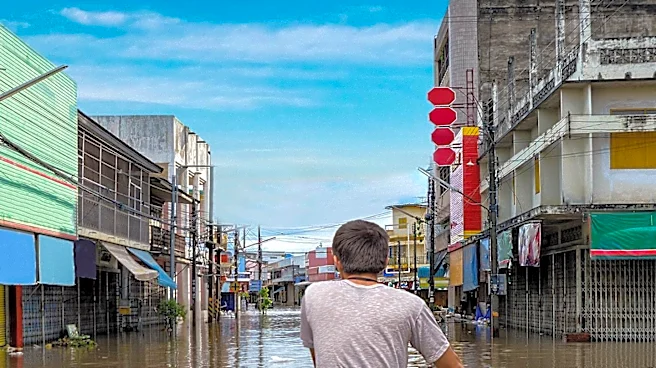
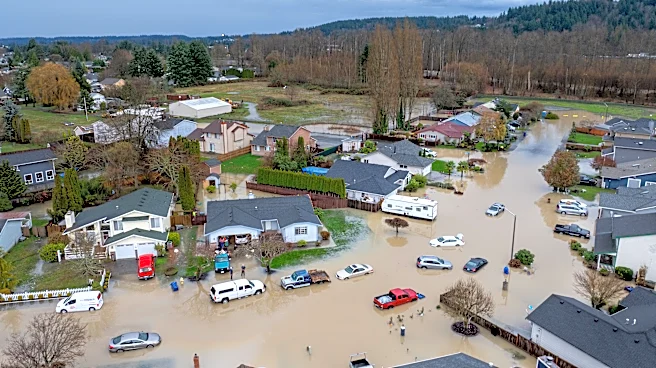
disaster-prone country. The nation faces an average of 20 tropical cyclones annually, alongside frequent floods, earthquakes, landslides, and tsunamis. Dr. Lagmay, who leads Project NOAH (Nationwide Operational Assessment of Hazards), highlighted how scientific innovations like flood mapping, real-time hazard monitoring, and accessible public apps have significantly reduced death tolls from floods. He cited the example of Typhoon Pablo (Bopha), where Cagayan de Oro experienced zero casualties due to improved preparedness. His work involves using LiDAR and drones to map flood-prone areas and making this information available to the public through an app and website. Dr. Lagmay also exposed corruption in flood control projects, where billions of Philippine pesos were budgeted but not effectively utilized, leading to 'ghost' projects.
Why It's Important?
The Philippines' vulnerability to natural disasters, exacerbated by climate change, rapid urban growth, deforestation, and poor planning, poses significant threats to lives, infrastructure, and economic stability. Dr. Lagmay's efforts to integrate science into disaster risk reduction are crucial for fostering national resilience. By providing accessible, real-time hazard information, Project NOAH empowers communities to make informed decisions, thereby reducing casualties and economic losses. The exposure of corruption in flood control projects underscores the importance of transparency and accountability in disaster management funding. Effective disaster preparedness not only saves lives but also prevents the diversion of funds meant for critical infrastructure, ensuring that resources are genuinely used to mitigate the impacts of climate-related events. This proactive approach is vital for the long-term development and stability of the country.
What's Next?
Dr. Lagmay plans to continue improving the quality of Project NOAH's maps and make the software even more accessible and engaging to the public, incorporating animations and music to enhance learning. The goal is to build a 'culture of resilience and safety' by increasing public awareness and engagement with disaster preparedness information. This ongoing effort aims to ensure that scientific data is not only accurate but also effectively communicated to the people who need it most. Furthermore, the insights gained from exposing corruption in past flood control projects could lead to stricter oversight and more transparent allocation of funds for future disaster mitigation initiatives. The continued institutionalization of open data, high-resolution hazard mapping, and advanced predictive technologies by organizations like the University of the Philippines Resilience Institute (UPRI) and the NOAH Center will be key in integrating climate intelligence into governance and land-use planning.
Beyond the Headlines
The work of Dr. Lagmay extends beyond immediate disaster response, touching upon critical ethical and governance issues. The revelation of 'ghost' flood control projects highlights a systemic problem of corruption that can undermine even the most well-intentioned efforts to combat climate change impacts. This not only wastes public funds but also directly endangers lives by leaving communities unprotected. The emphasis on making scientific information engaging and accessible to the public speaks to a broader cultural shift towards citizen science and empowering individuals with knowledge. By fostering a 'culture of resilience,' the initiative aims to embed disaster preparedness into the societal fabric, making it a collective responsibility rather than solely a government one. This approach could serve as a model for other disaster-prone regions grappling with similar challenges of climate change and governance.