







What's Happening?
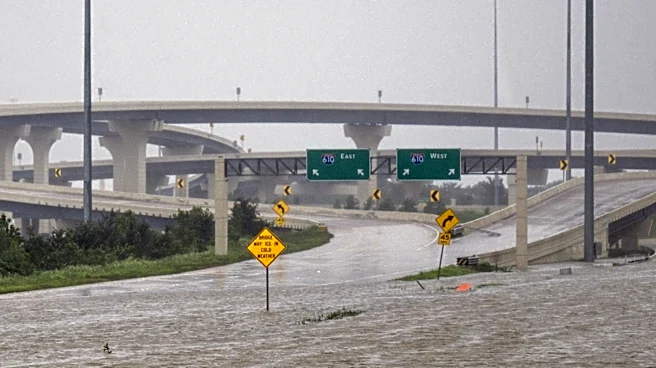
Preliminary findings from the North Central Texas Council of Governments (NCTCOG) indicate that flooding could cause nearly $2.3 billion in damage across western North Texas over the next 50 years. This projection is part of the Integrated Transportation
and Stormwater Infrastructure Study, launched in 2023, which aims to identify optimal strategies for growth to mitigate flood damage and enhance safety. The study focuses on areas including parts of Parker, Tarrant, Hood, and Johnson counties, where rapid development is converting open land into impervious surfaces like roads and parking lots. This conversion is expected to increase developed surfaces from 6.4% in 2020 to 35.2% by 2070, leading to greater runoff and reduced natural absorption of precipitation. The damage estimate accounts for existing and future buildings, their contents, vehicles, and displacement costs for residents.
Why It's Important?
This study is crucial for regional planning and economic stability in North Texas. The projected $2.3 billion in flood damage represents a significant financial burden that could impact property values, insurance costs, and the overall economic health of the affected counties. The rapid urbanization, coupled with anticipated increases in extreme precipitation due to climate change, creates a compounding risk that demands proactive solutions. The findings highlight the urgent need for integrated planning that considers both transportation and stormwater management to prevent future economic losses and protect communities. Failure to address these issues could lead to widespread disruption, displacement of residents, and a strain on public resources, affecting thousands of households and businesses in the region.
What's Next?
The NCTCOG study is expected to release its final findings by the end of this year, which will include analysis for additional areas like Denton and Wise counties. The study has already identified over 200 potential projects aimed at reducing flooding and strengthening infrastructure, such as larger culverts, drainage built into roadway corridors, rain gardens, and flood warning systems. Nine of these projects are currently being submitted for state funding, indicating readiness for immediate design and construction. Local policy options, including keeping new buildings away from floodplains, requiring developers to assess downstream impacts, and reducing paved surfaces, are also being suggested. These recommendations will guide future development and infrastructure investments to build a more resilient North Texas.
Beyond the Headlines
The projected flood damage in North Texas underscores a broader national challenge: the increasing vulnerability of urban and developing areas to climate-related events. This study highlights the critical intersection of urban planning, environmental science, and economic forecasting. The shift from permeable to impervious surfaces is a common consequence of rapid development, often exacerbating flood risks. The ethical implications involve balancing economic growth with environmental stewardship and ensuring equitable protection for all communities, especially those downstream. Long-term, this could trigger a paradigm shift in how cities approach infrastructure development, emphasizing green infrastructure and sustainable land use practices to adapt to a changing climate and protect future generations from escalating environmental and financial costs.