






What's Happening?
President Donald Trump announced that Russia and Ukraine have agreed to a three-day ceasefire at his request, marking a potential pause in the ongoing conflict between the two nations. The ceasefire, which includes a suspension of all kinetic activity
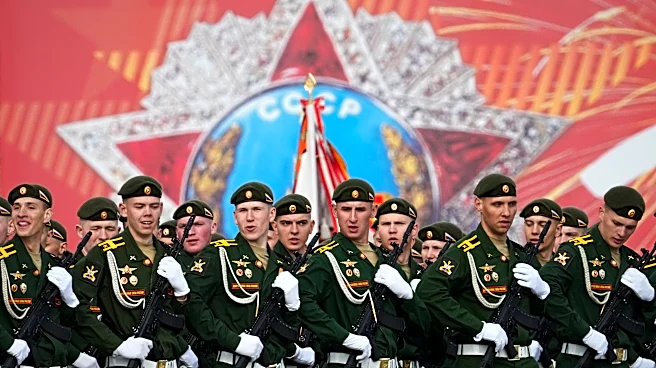
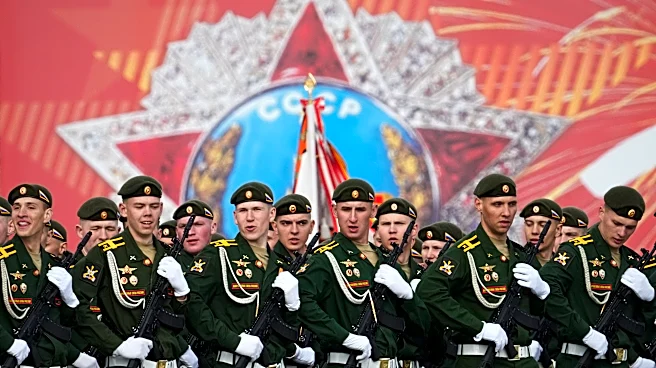
and an exchange of 1,000 prisoners by each country, is set to coincide with Russia's Victory Day celebrations. Ukrainian President Volodymyr Zelenskyy and Russian President Vladimir Putin's foreign affairs adviser, Yuri Ushakov, confirmed the agreement. Trump expressed hope that this ceasefire could be the 'beginning of the end' of the war that began in February 2022. Despite previous ceasefire attempts unraveling quickly, this agreement was reached through U.S.-mediated discussions, with Ukraine emphasizing the importance of prisoner exchanges. Secretary of State Marco Rubio noted that while U.S. mediation efforts have not yet led to a 'fruitful outcome,' the U.S. remains ready to assist in achieving a peaceful resolution.
Why It's Important?
The ceasefire agreement brokered by President Trump is significant as it represents a rare moment of diplomatic engagement in the protracted conflict between Russia and Ukraine. The potential pause in hostilities could provide a window for further negotiations and humanitarian relief, particularly concerning the exchange of prisoners, which has been a central demand for Ukraine. The involvement of the U.S. in mediating this agreement underscores its role as a key diplomatic player in international conflicts. However, the fragility of past ceasefires and ongoing tensions highlight the challenges in achieving a lasting peace. The ceasefire's timing with Russia's Victory Day adds a layer of complexity, as it is a significant national holiday that could influence public sentiment and political dynamics in Russia.
What's Next?
Following the ceasefire, the focus will likely shift to ensuring compliance with the agreement and facilitating the prisoner exchange. The U.S. is expected to play a crucial role in monitoring and holding Russia accountable to the terms of the ceasefire. The success of this agreement could pave the way for more comprehensive peace talks, although skepticism remains due to the history of failed negotiations. The international community will be watching closely to see if this ceasefire leads to a reduction in violence and a renewed commitment to diplomatic solutions. Additionally, the response from both Russian and Ukrainian domestic audiences could influence future political and military strategies.