


What's Happening?
Senate Democrats have blocked Congressman Gabe Evans’ bipartisan Ratepayer Protection Act for the second time in two weeks, despite the legislation passing the U.S. House of Representatives with an overwhelming 417–3 vote. The bill, designed to shield
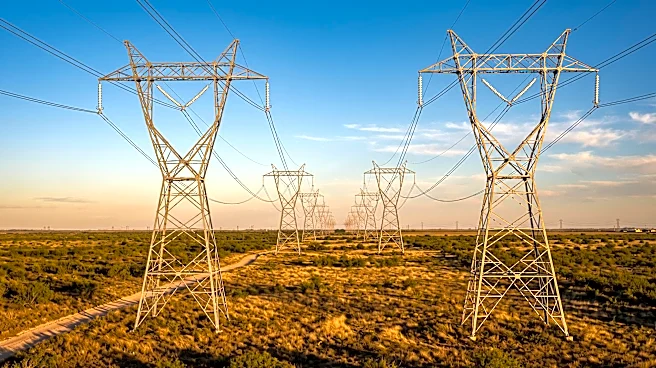
American families, farmers, seniors, and small businesses from bearing the costs of new energy infrastructure required by large-load data centers, failed to advance in the Senate after receiving 57 votes (53 Republicans and 4 Democrats), falling short of the 60 votes needed. Colorado Senators Michael Bennet and John Hickenlooper voted against the legislation, a move criticized by Congressman Evans, who stated that Senate Democrats prioritized 'political games' over a 'commonsense solution.' The Act would have required regulators in states without comparable protections to hold public hearings on a federal standard, ensuring large-load data centers pay the full incremental costs of new power generation, transmission, and distribution infrastructure. It also preserved states' authority to implement such standards based on their specific electric grids and communities. The legislation applies to non-residential customers with an aggregate peak electric demand of 100 megawatts or more at a single site or campus.
Why It's Important?
The blocking of the Ratepayer Protection Act carries significant implications for U.S. consumers and the energy sector. The rapid expansion of large-load data centers, driven by the growth of artificial intelligence, is placing unprecedented demands on the nation's energy infrastructure. Without specific protections, the costs associated with upgrading and expanding this infrastructure could be passed on to residential and small business ratepayers, leading to higher electricity bills. This legislation aimed to establish a federal standard that would ensure these large energy consumers bear the full incremental costs, thereby preventing an undue financial burden on ordinary citizens. The failure to pass this bill means that states without existing protections may continue to see residents and small businesses subsidize the energy needs of major tech companies. This situation highlights a growing tension between technological advancement and consumer protection, as the energy regulatory system was not originally designed to accommodate the scale of the current data center boom. The outcome also underscores partisan divisions on economic policy, with Republicans accusing Democrats of playing politics at the expense of consumer affordability.
What's Next?
Congressman Evans has indicated that he will continue to work with Senator Husted and colleagues in both chambers to advance protections for American ratepayers. This suggests that efforts to introduce similar legislation or find alternative pathways to address the issue of data center energy costs are likely to persist. The debate may shift to state-level initiatives, as the legislation itself preserved states' authority to determine how to implement such standards. Consumer advocacy groups, who have largely supported distinct rate classes for large energy consumers, will likely continue to push for safeguards at both federal and state levels. The ongoing expansion of AI and data centers means that the demand for energy infrastructure will only increase, making this a recurring issue in legislative and regulatory discussions. Future legislative attempts might focus on refining the bill's scope to address Democratic concerns about its perceived limitations, potentially leading to a more comprehensive approach that garners broader bipartisan support. The issue may also become a point of contention in upcoming elections, with politicians highlighting their stances on protecting ratepayers from rising energy costs.
Beyond the Headlines
The debate surrounding the Ratepayer Protection Act touches upon deeper implications concerning the equitable distribution of economic burdens in an era of rapid technological advancement. The rise of artificial intelligence, while promising significant societal benefits, also brings substantial infrastructure costs. The question of who should bear these costs—the large corporations directly benefiting from AI infrastructure or the general public through increased utility rates—is a fundamental ethical and economic challenge. This situation also exposes the limitations of existing regulatory frameworks, which were not designed to anticipate the massive energy demands of modern data centers. The partisan divide on this issue, despite the bill's initial bipartisan support in the House, suggests a broader struggle over regulatory philosophy: whether to impose federal standards to ensure fairness or to allow states more autonomy, potentially leading to varied protections across the country. Furthermore, the incident highlights the influence of powerful industries, such as the tech sector, on energy policy and the ongoing need for robust consumer advocacy to balance corporate interests with public welfare. The long-term shift could involve a re-evaluation of how essential services like electricity are priced and regulated in response to evolving technological landscapes.