





What's Happening?
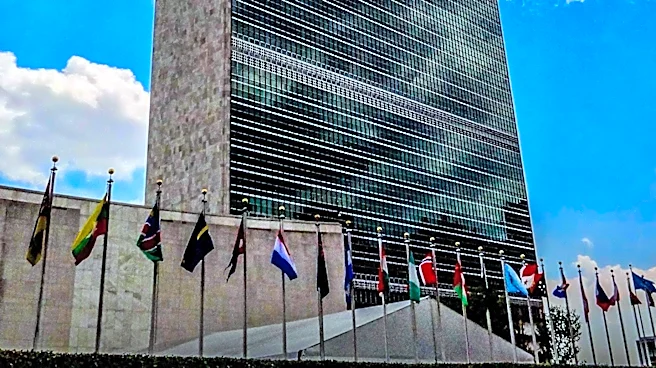
UN Secretary-General António Guterres commended Indonesia's role as a 'pillar of multilateralism' during his keynote address at the Foreign Policy Circle Talks (FPCT) in Indonesia. Guterres highlighted Indonesia's consistent support for the United Nations
and a global order based on multilateral cooperation, recognizing its influence in shaping international cooperation across the Asia-Pacific and the Global South. Indonesian Foreign Minister Arrmanatha reaffirmed the nation's commitment to the UN Charter and international law, emphasizing its active participation in UN peacekeeping missions and efforts to strengthen UN governance. Both leaders stressed the necessity of reinforcing multilateral institutions to effectively address pressing global challenges such as peace and security, development, climate change, and artificial intelligence. The Secretary-General's visit, his first official trip to Indonesia in his current capacity, aimed to strengthen the partnership between Indonesia and the UN.
Why It's Important?
The emphasis on strengthening multilateral institutions by the UN Secretary-General and Indonesia underscores a critical global need for collaborative approaches to complex issues. For the U.S., this perspective is significant as it highlights the ongoing debate between unilateral and multilateral foreign policy strategies. A robust multilateral system, as advocated, can provide more stable frameworks for international trade, security, and environmental agreements, which directly impact U.S. economic interests and national security. The call for 'better multilateralism' suggests a recognition that existing structures may need reform to remain effective in a rapidly changing world. This could influence U.S. engagement with international bodies and its approach to global challenges, potentially leading to increased cooperation on issues like climate change and global health, where collective action is paramount. Conversely, a weakening of multilateralism could lead to increased geopolitical instability and challenges for U.S. foreign policy objectives.
What's Next?
The discussions at the FPCT indicate a continued push for UN reform to make the organization more inclusive, effective, and responsive to member states' needs. Indonesia's commitment to seeking a non-permanent seat on the UN Security Council for 2029–2030 signals its intent to play an even more prominent role in global governance. This trajectory suggests that the U.S. and other major powers will likely face ongoing calls to support and engage with a reformed multilateral system. Future dialogues and initiatives will likely focus on practical steps to enhance international cooperation on shared challenges, potentially leading to new treaties, agreements, or revised mandates for existing international organizations. The emphasis on addressing 21st-century questions with updated blueprints implies that traditional approaches to global issues may be re-evaluated, prompting a need for adaptability in international relations.
Beyond the Headlines
The dialogue between the UN Secretary-General and Indonesian officials touches upon a deeper philosophical debate regarding the efficacy and future of global governance. The Secretary-General's assertion that 'the answer to deepening frustration with multilateralism is not less multilateralism. It is better multilateralism' reflects a critical juncture where the international community must either adapt and strengthen its cooperative mechanisms or risk fragmentation. This sentiment has profound implications for the U.S., which has historically played a leading role in shaping the international order. The call for 'better multilateralism' implies a need for more equitable representation, increased accountability, and greater responsiveness from international bodies. This could challenge existing power dynamics and require the U.S. to re-evaluate its engagement strategies, potentially fostering a more inclusive global framework that better addresses the diverse needs and perspectives of all nations.