





What's Happening?
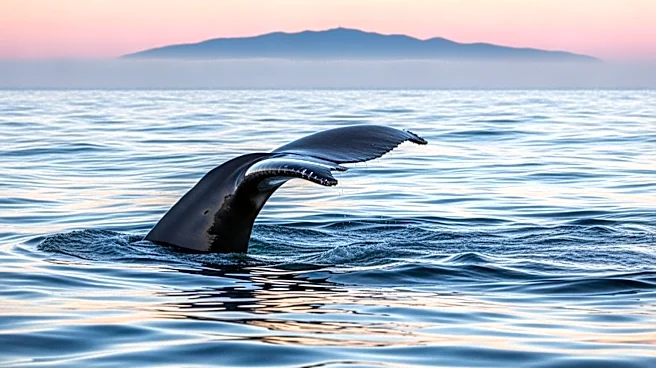
A humpback whale, known by the nicknames 'Timmy' and 'Hope', was found dead off the coast of the Danish island of Anholt. This whale had been the subject of a significant rescue operation after it repeatedly became stranded off Germany's Baltic Sea coast.
The whale was released on May 2, after being transported towards the North Sea in a specially designed barge. Danish authorities confirmed the whale's identity through a tracking device that was still attached to its back. The device's position and appearance matched those observed during the rescue efforts in German waters.
Why It's Important?
The death of 'Timmy' highlights the challenges and complexities involved in marine animal rescue operations. Despite the significant resources and efforts dedicated to saving the whale, its demise underscores the difficulties in ensuring the long-term survival of such animals once they are returned to the wild. This incident may prompt a reevaluation of current rescue strategies and protocols, potentially influencing future conservation efforts and policies. The event also raises awareness about the environmental and human-induced factors that contribute to marine animal strandings.
What's Next?
In the wake of this incident, there may be increased scrutiny on the methods used in marine animal rescues. Environmental agencies and conservationists might push for more research into the causes of whale strandings and the development of more effective rescue and rehabilitation techniques. Additionally, there could be calls for international cooperation to address the broader environmental issues affecting marine life, such as pollution and climate change.
Beyond the Headlines
The story of 'Timmy' also brings attention to the ethical considerations in wildlife rescue operations. The decision to intervene in natural processes and the potential stress caused to animals during rescue efforts are topics that may be further explored. This incident could lead to discussions about the balance between human intervention and natural selection in wildlife conservation.