



What's Happening?
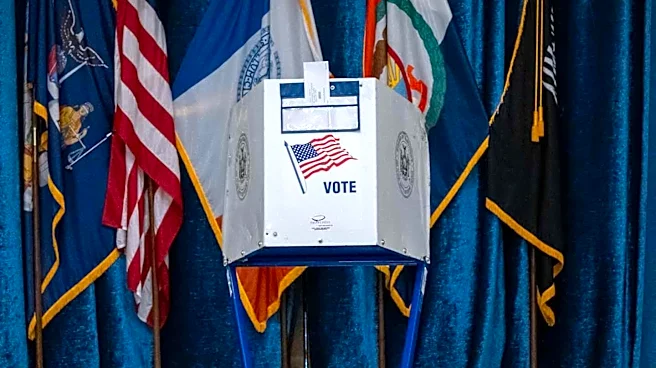
Alaska voters are participating in the 2026 primary election, with polls open until 8 p.m. on Tuesday. This pick-one primary will determine which candidates advance to the November 3 general election for governor, U.S. Senate, U.S. House, and 50 out of
60 seats in the Alaska Legislature. Additionally, voters are considering a ballot measure that, if passed, would reinstate limits on campaign contributions. Early voting began on August 3, with over 31,000 Alaskans having already cast their ballots by Monday noon. Voters are required to present identification at polling places, and absentee ballots must be postmarked by election day or received by the Division of Elections within 10 days. The first unofficial results are expected after 9 p.m. Tuesday, with final results aimed for certification by August 31.
Why It's Important?
This primary election is particularly significant due to the open races for statewide offices and the ballot measure concerning campaign finance. Republican Governor Mike Dunleavy is termed out, leading to a crowded field of 17 candidates vying for the governorship. Similarly, U.S. Senator Dan S. Sullivan faces 15 opponents, and U.S. House Representative Nick Begich III is challenged by 13 candidates. The outcome of these races will shape Alaska's political landscape for the coming years, influencing federal and state representation. The ballot measure on campaign finance limits could significantly alter how political campaigns are funded in Alaska, potentially impacting the influence of individual donors and political groups on future elections. The high number of candidates in several legislative races also means that at least one contender will be eliminated, setting the stage for competitive general elections.
What's Next?
Following the close of polls at 8 p.m. on Tuesday, the Alaska Division of Elections will release the first round of unofficial results after 9 p.m. The top four vote-getters in each statewide race, regardless of party affiliation, will advance to the November 3 general election. For legislative races with more than four candidates, at least one contender will be eliminated. The Division of Elections aims to certify the final results by August 31. Voters will then prepare for the general election, which will also include Ballot Measure 2, addressing ranked-choice voting, open primaries, and campaign finance disclosure laws. The results of this primary will set the stage for the final electoral contests and determine the future political direction of Alaska.
Beyond the Headlines
The Alaska primary election highlights the state's unique electoral system, particularly the 'pick-one' open primary format, which allows voters to choose any candidate regardless of party affiliation. This system, combined with the upcoming Ballot Measure 2 concerning ranked-choice voting, reflects an ongoing debate about electoral reform and voter choice in Alaska. The high number of candidates in key races underscores a dynamic political environment, potentially indicating a desire for new leadership or a diverse range of policy perspectives among the electorate. The focus on campaign finance limits through Ballot Measure 1 also points to broader concerns about transparency and the role of money in politics, issues that resonate across the U.S. The outcomes of these elections and ballot measures could serve as a case study for other states considering similar electoral and campaign finance reforms.