






What's Happening?
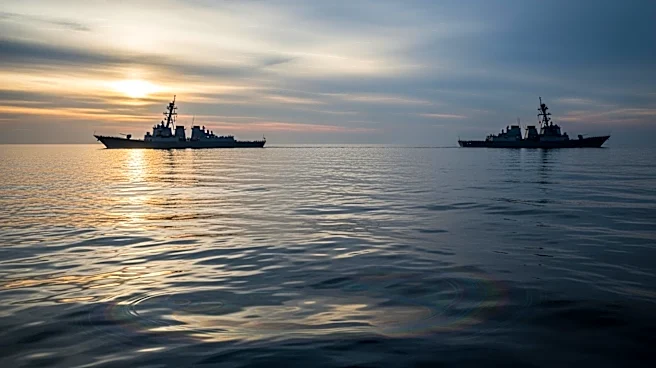
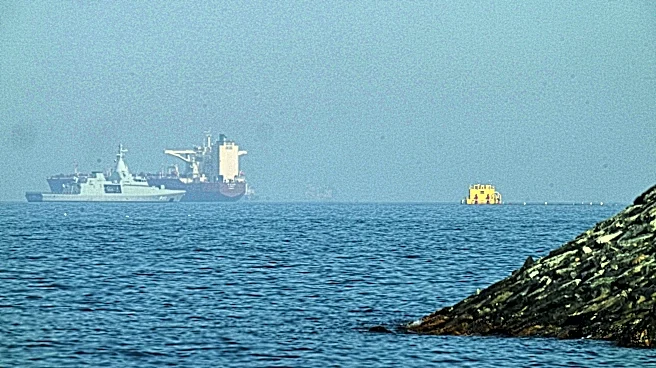
Recent drone strikes have tested the fragile ceasefire in the ongoing conflict involving Iran. A drone attack set a cargo vessel ablaze near Qatar, while the United Arab Emirates and Kuwait reported drones entering their airspace, with the UAE attributing
the attacks to Iran. These incidents mark a significant threat to the month-old ceasefire, which the Trump administration insists is still in effect. The US has been awaiting Iran's response to a peace proposal aimed at ending the conflict, reopening the Strait of Hormuz, and addressing Iran's nuclear program. The situation remains tense as Iran continues to restrict traffic through the strategic waterway, and the US maintains a blockade of Iranian ports.
Why It's Important?
The ongoing drone attacks and the fragile ceasefire have significant implications for global oil markets and regional stability. The Strait of Hormuz is a critical chokepoint for the global oil supply, and any disruption can lead to increased oil prices and economic instability. The US's involvement and its blockade of Iranian ports further complicate the situation, potentially escalating tensions in the region. The outcome of the peace proposal and Iran's response could either stabilize or further destabilize the region, affecting international relations and economic conditions worldwide.
What's Next?
The US is closely monitoring Iran's response to the peace proposal, which could lead to a resolution of the conflict or a resumption of hostilities. The international community, including key stakeholders like the United Nations and neighboring countries, may play a role in mediating the situation. The potential reopening of the Strait of Hormuz and the rollback of Iran's nuclear program are critical factors that will influence future developments. The situation remains fluid, with the possibility of further drone attacks and military responses.