







What's Happening?
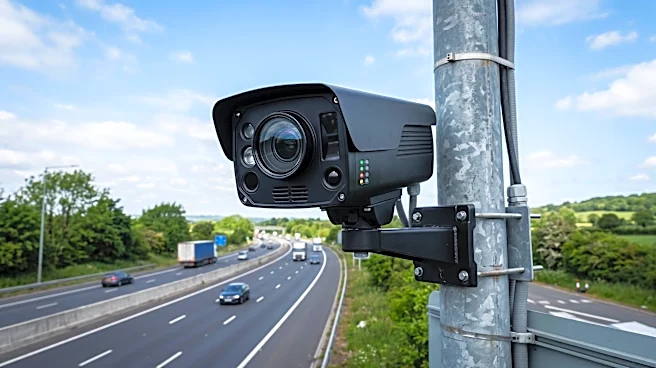
In Chamarajanagar district, AI-enabled cameras installed on state and national highways have detected 1,488 traffic violations over a six-week period. These cameras, part of an Intelligent Traffic Management System (ITMS) implemented on September 22,
are designed to operate 24/7, monitoring speeding, regulating traffic, and strengthening crime surveillance. Violations identified include riding without helmets, overspeeding, and triple riding. Authorities issued notices for all 1,488 cases, but only 17 vehicle owners have paid penalties, totaling ₹9,500. Chamarajanagar SP M Mutharaju stated that tough action would be taken against those who have not responded or paid the penalties. The system integrates with the e-challan platform and the national Vahan vehicle database to automatically generate violation notices, which are then sent to vehicle owners via mobile phones and physical delivery.
Why It's Important?
The deployment of AI cameras on Chamarajanagar highways represents a significant technological advancement in traffic enforcement and road safety. This initiative aims to reduce road accidents and enforce strict lane discipline by continuously monitoring traffic. The high number of violations detected in a short period highlights the prevalence of traffic rule non-compliance, underscoring the need for such automated systems. However, the low rate of penalty collection (only 17 out of 1,488 cases) indicates a potential challenge in the enforcement process, possibly due to a lack of awareness, resistance from vehicle owners, or administrative hurdles in follow-up. Effective penalty collection is crucial for the deterrent effect of such systems and for funding further road safety initiatives.
What's Next?
Chamarajanagar SP M Mutharaju has indicated that authorities will take stringent action against vehicle owners who have not paid their penalties. This suggests an upcoming phase of more aggressive enforcement, potentially involving legal measures or increased fines for non-compliance. The department will likely analyze the reasons behind the low penalty collection rate to refine its enforcement strategies. Public awareness campaigns might be launched to educate citizens about the new AI camera system, the types of violations detected, and the consequences of non-payment. Continuous monitoring and evaluation of the ITMS will be essential to optimize its effectiveness in improving road safety and traffic discipline.
Beyond the Headlines
The implementation of AI-enabled cameras for traffic enforcement in Chamarajanagar signifies a broader trend towards leveraging advanced technology for public safety and governance. This shift moves beyond traditional manual enforcement, offering greater efficiency, objectivity, and continuous surveillance. However, the initial challenge of low penalty collection highlights the socio-technical aspects of such deployments. It underscores the need for not just technological solutions but also robust legal frameworks, public engagement, and efficient administrative processes to ensure compliance. The success of this system could set a precedent for other regions in India, influencing how technology is integrated into daily governance and law enforcement, while also raising questions about data privacy and the potential for algorithmic bias in automated systems.