




What's Happening?
New York lawmakers have passed a $269 billion state budget, marking the largest in the state's history and one of the latest approvals, occurring two months past its deadline. The budget introduces a pied-à-terre tax on luxury second homes in New York City,
modifies state climate goals, and extends mayoral control of New York City schools for two years. Additionally, it includes a 'no tax on tips' policy and reforms car insurance statutes to potentially reduce costs for New Yorkers. The budget also imposes a 50-foot buffer zone around religious centers to prevent harassment and provides a $557 million pension adjustment for public-sector unions. Despite these measures, the budget has been criticized for its size and potential economic impact, with concerns about increased state spending and higher taxes.
Why It's Important?
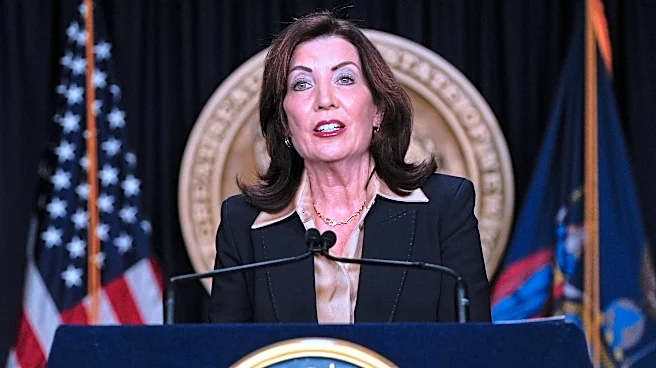
The approval of this budget is significant as it reflects the state's fiscal priorities and policy directions. The introduction of the pied-à-terre tax aims to address wealth inequality by targeting luxury property owners, potentially impacting the real estate market. The rollback of climate goals and car insurance reforms could have long-term effects on environmental policy and consumer costs. The budget's size and spending increases have raised concerns about fiscal sustainability, with critics warning that continued high spending and taxation could deter investment and economic growth in New York. The budget's provisions also highlight the political dynamics in the state, with Governor Kathy Hochul's administration pushing through controversial measures amid legislative resistance.
What's Next?
With the budget now passed, attention will shift to its implementation and the potential reactions from affected stakeholders, including real estate developers, environmental groups, and public-sector unions. The legislature has limited time to address non-budgetary items before the session ends, which may lead to further political maneuvering. The impact of the new taxes and policy changes will be closely monitored, particularly in terms of their economic and social effects. As the state approaches upcoming elections, the budget's provisions and their outcomes could influence political campaigns and voter sentiment.