


What's Happening?
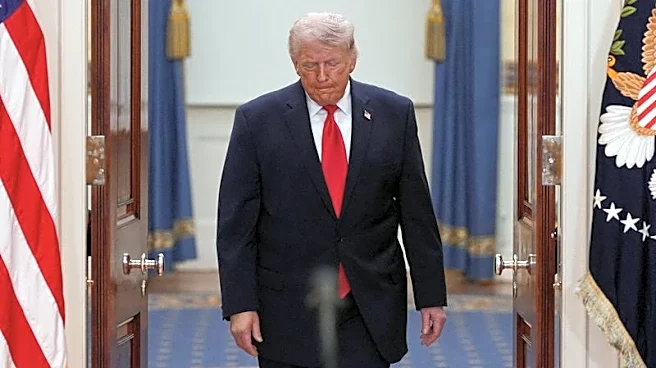
President Donald Trump has proposed painting the Eisenhower Executive Office Building, located next to the White House, with a 'magic paint' containing silicate. This proposal comes ahead of a key vote on exterior changes to the building, which is known
for its ornate Gilded Age architecture. A panel of experts has raised concerns that the proposed paint may be incompatible with the building's granite exterior. Trump claims the paint would strengthen the stone, keep water out, and prevent staining. However, preservationist groups have challenged the proposal, arguing that the paint would not bond chemically with granite and could cause permanent damage. The Eisenhower building, completed in 1888, serves as office space for the president's staff, including the Office of the Vice President and the National Security Council.
Why It's Important?
The proposal to use 'magic paint' on the Eisenhower Executive Office Building has sparked a legal and preservationist debate. The building is a significant historical structure, and any changes to its exterior could have lasting impacts on its preservation. The preservationist groups argue that the paint could cause irreversible damage, highlighting the importance of adhering to environmental and historic preservation reviews. The decision could set a precedent for how historical buildings are maintained and altered, potentially affecting other federal buildings. The controversy also reflects broader tensions between aesthetic preferences and preservation standards in government property management.
What's Next?
The Commission of Fine Arts, which oversees changes to federal buildings, is set to review the painting proposal. The preservationist groups have filed a lawsuit to halt any changes until a standard review process is completed. The outcome of this legal challenge could influence future decisions on federal building maintenance and alterations. If the commission approves the proposal, it may face further legal challenges from preservationists. The White House has yet to comment on the findings of the preservationist groups, and the decision could impact how similar proposals are handled in the future.