





What's Happening?
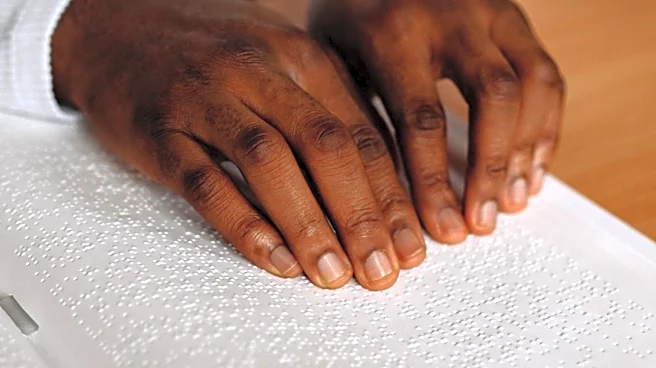
Demopolis High School (DHS) has initiated a partnership with the Alabama Regional Library for the Blind and Physically Disabled. This collaboration, spearheaded by DHS librarian Kelley Tarpley, aims to provide visually impaired students with free access
to audiobooks and other accessible reading materials. The program allows eligible students to download materials directly to their personal devices or receive them by mail at no cost. This initiative is designed to enhance reading opportunities, foster learning, and enable students to explore new interests independently. The Alabama Regional Library operates under the Alabama Public Library Service and is part of the National Library Service for the Blind and Print Disabled network, a division of the Library of Congress. This network, including its subregional library in Talladega, serves over 8,000 eligible Alabama residents by offering accessible reading resources.
Why It's Important?
This partnership is significant as it directly addresses educational equity for visually impaired students in the U.S. By providing free and accessible audiobooks, DHS is removing a critical barrier to learning and literacy for a vulnerable student population. This initiative ensures that visual impairments do not hinder a student's ability to engage with educational content, discover new stories, or acquire knowledge, thereby promoting lifelong reading habits. The program's impact extends beyond individual students, setting a precedent for other educational institutions to adopt similar inclusive practices. It highlights the vital role of libraries and educational staff in leveraging state and national resources to support diverse learning needs. Furthermore, it underscores the broader societal commitment to making information and education universally accessible, aligning with principles of inclusivity and equal opportunity in the American education system.
What's Next?
The immediate next step for Demopolis High School will likely involve continued promotion of the program among eligible students and their families to maximize participation. Librarian Kelley Tarpley will continue to facilitate access and support students in utilizing the available resources. Other schools in Alabama and potentially across the U.S. might look to DHS as a model for implementing similar partnerships to serve their visually impaired student populations. The Alabama Regional Library for the Blind and Physically Disabled will continue its efforts to expand its reach and services, potentially seeking further collaborations with educational institutions. The success of this program could also encourage increased funding and support for accessible reading initiatives at both state and national levels, ensuring more students have the opportunity to benefit from such resources.
Beyond the Headlines
This initiative touches upon deeper societal implications regarding accessibility and inclusion in education. It challenges the traditional reliance on print materials and emphasizes the growing importance of diverse formats, such as audiobooks, in modern learning environments. The partnership highlights the ethical imperative for educational institutions to proactively address the needs of all students, regardless of physical limitations. Culturally, it reinforces the value of reading and learning as fundamental rights, not privileges, and promotes a more inclusive educational landscape. In the long term, such programs can contribute to higher educational attainment and greater independence for visually impaired individuals, fostering their full participation in society and the workforce. It also underscores the often-unsung role of librarians as crucial advocates and facilitators of equitable access to information and knowledge.