





What's Happening?
Recent research published in the Cell Press journal Neuron has uncovered that exercise not only strengthens muscles but also significantly reshapes brain activity, enhancing endurance. The study, led by J. Nicholas Betley from the University of Pennsylvania,
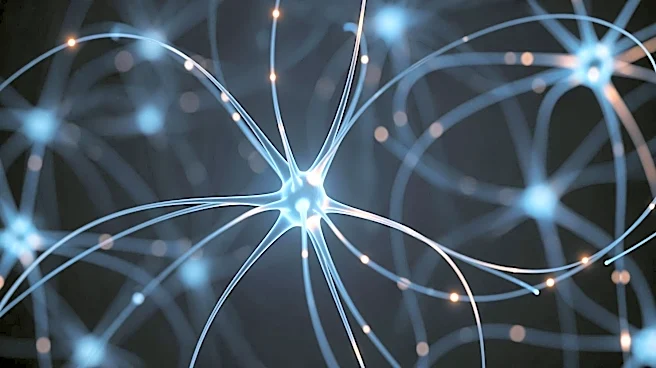
observed that repeated exercise alters brain activity, particularly in the ventromedial hypothalamus (VMH), a region associated with energy management, body weight, and blood sugar regulation. Experiments conducted on mice demonstrated that after treadmill running, there was increased activity in specific VMH nerve cells known as steroidogenic factor-1 (SF1) neurons. These neurons remained active for at least an hour post-exercise, contributing to improved endurance over a two-week period. Blocking these neurons post-exercise hindered endurance gains, highlighting the critical role of brain activity in physical adaptation.
Why It's Important?
This study provides new insights into the broader impacts of exercise, suggesting that the brain plays a crucial role in physical endurance and recovery. The findings could have significant implications for various groups, including older adults, stroke or injury patients, and athletes. By understanding how brain activity post-exercise contributes to endurance, new strategies could be developed to enhance physical performance and recovery. This could lead to more effective exercise programs that encourage sustained physical activity, potentially improving public health outcomes. Additionally, the research may pave the way for innovative treatments that leverage brain activity to aid in rehabilitation and performance enhancement.
What's Next?
The researchers aim to further explore the biological processes behind the observed effects, particularly how SF1 neuron activity post-exercise aids in recovery and adaptation. Future studies may focus on translating these findings into practical applications for human health, such as developing interventions to maintain activity levels in older adults or improve recovery times for athletes. The potential to shorten the timeline for exercise benefits could also motivate more people to engage in regular physical activity, thereby enhancing overall health and well-being.