
What's Happening?
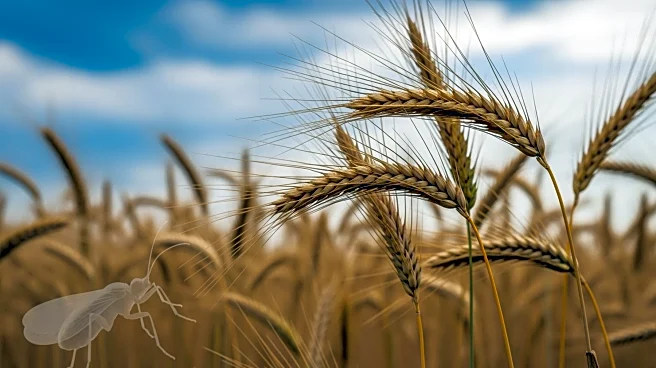
Recent research has revealed that rising temperatures due to climate change are expected to increase pest damage to crops, particularly wheat, leading to greater yield loss. Contrary to the assumption
that extreme heat waves would reduce pest populations, the study indicates that pests can adapt to high temperatures, further exacerbating crop damage. The research focused on the behavioral plasticity of pests, such as the aphid species Sitobion avenae, which can mitigate the adverse effects of extreme heat through fine-scale behavioral thermoregulation (FSBT). This adaptation allows pests to survive and thrive even under extreme temperature conditions, thereby increasing their impact on crop yields.
Why It's Important?
The findings of this study are significant as they challenge the prevailing notion that extreme heat would naturally control pest populations. Instead, the ability of pests to adapt to high temperatures could lead to increased agricultural losses, affecting food security and economic stability. The research underscores the need for new pest management strategies that consider the adaptive behaviors of pests in response to climate change. This is particularly crucial for wheat production, a staple crop that feeds millions globally. The study highlights the potential for increased pest-induced yield loss, which could exacerbate food shortages and impact global food supply chains.
What's Next?
The study suggests that agricultural stakeholders need to develop and implement adaptive pest management strategies that account for the behavioral adaptations of pests to extreme temperatures. This may involve investing in research to better understand pest behaviors and developing technologies or practices that can mitigate their impact. Policymakers and agricultural leaders may need to collaborate on creating frameworks that support sustainable agricultural practices and enhance resilience against climate-induced challenges. Additionally, there may be a need for increased funding and resources to support farmers in adopting these new strategies.
Beyond the Headlines
The research highlights a broader implication of climate change on agricultural ecosystems, emphasizing the interconnectedness of environmental factors and pest dynamics. It raises ethical considerations regarding the responsibility of developed nations to support developing countries in managing the impacts of climate change on agriculture. Furthermore, the study may prompt discussions on the role of biotechnology and genetic engineering in developing pest-resistant crop varieties. Long-term, this research could influence global agricultural policies and drive innovation in sustainable farming practices.