



What's Happening?
U.S. Senator Peter Welch (D-Vt.) has announced that the Federal Emergency Management Agency (FEMA) will provide over $7.84 million in new federal funding to Vermont. This funding is designated to help the state rebuild and recover infrastructure damaged
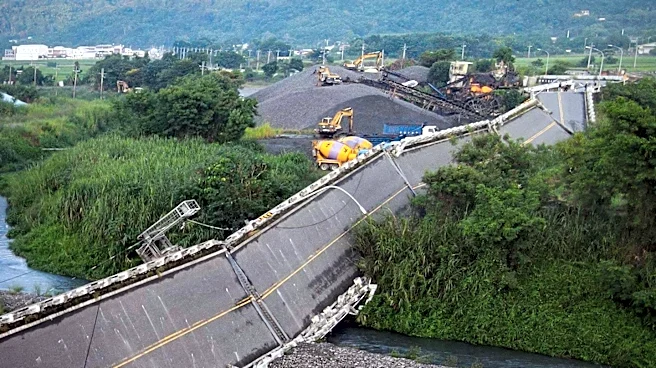
by severe flooding, landslides, and mudslides that occurred between 2017 and 2024. Specific allocations include $3,321,337 for the Vermont Agency of Transportation (VTrans) to repair and replace culverts and train tracks along the Washington County Railroad, aiming to restore pre-disaster functionality and enhance climate resiliency. Additionally, the Town of Craftsbury will receive $656,766 for bridge repair, and the Town of Hardwick Electric Department will get $3,871,746 to restore its hydro generation penstocks and implement flood-resiliency improvements. Senator Welch highlighted that while this funding is significant, the nearly decade-long wait for some communities underscores the need for FEMA reform.
Why It's Important?
This substantial federal funding is critical for Vermont's long-term recovery and resilience against future natural disasters. The repair of vital infrastructure, such as roads, bridges, and railway systems, is essential for economic stability, public safety, and community connectivity. The investment in climate resiliency measures, like improved culverts and hydro generation penstocks, will help mitigate the impact of future flooding events, protecting lives and property. However, the extended timeline for receiving this aid, as noted by Senator Welch, points to systemic issues within FEMA's disaster response framework. Delays in funding can prolong recovery, exacerbate economic hardship, and hinder communities' ability to rebuild effectively. This situation underscores the ongoing debate about the efficiency and responsiveness of federal disaster relief programs and the need for legislative reforms to streamline the process.
What's Next?
Senator Welch is advocating for legislative changes, such as his Disaster AID Act, to address the delays and inefficiencies in federal disaster aid distribution. This bill aims to cut red tape, improve the efficiency of aid delivery, provide technical assistance to small towns, and prevent the White House from withholding disaster response funding. The immediate next steps for Vermont will involve the allocation and utilization of the announced $7.8 million to commence or continue infrastructure repair and resiliency projects. The Vermont Agency of Transportation, the Town of Craftsbury, and the Town of Hardwick Electric Department will be responsible for implementing these projects. The broader discussion around FEMA reform is likely to continue in Congress, with a focus on ensuring that disaster-impacted communities receive timely and effective support.
Beyond the Headlines
The case of Vermont's delayed disaster funding highlights a recurring challenge in U.S. disaster management: the gap between immediate needs and the often-slow pace of federal assistance. This delay can have profound social and economic consequences, leading to prolonged displacement, business disruptions, and increased stress on affected populations. The push for legislative reform, like the Disaster AID Act, reflects a growing recognition that current systems may not be adequately equipped to handle the increasing frequency and intensity of natural disasters. Beyond the financial aspect, these delays can erode public trust in government response capabilities and disproportionately affect smaller communities with limited resources. The long-term implications involve not just rebuilding physical infrastructure but also strengthening community preparedness and advocating for policy changes that prioritize swift and equitable disaster recovery.