





What's Happening?
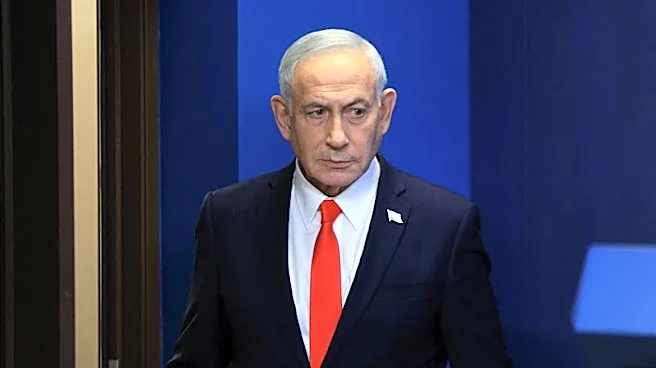
Prime Minister Benjamin Netanyahu announced plans to form a broad national government following the upcoming elections, aiming to address Israel's security, economic, and societal challenges. The proposal seeks to move away from narrow political majorities
and build a consensus around Zionist principles. However, the timing of the announcement, close to the election, has been met with skepticism. Israel has faced significant internal divisions, particularly over judicial reforms and military service issues, which have strained political discourse and public trust.
Why It's Important?
A national unity government could potentially stabilize Israeli politics and provide a stronger platform to address ongoing challenges, including the conflict in Gaza and tensions with Iran. The proposal reflects a need for broader political cooperation to make strategic decisions with greater legitimacy. However, the skepticism surrounding Netanyahu's intentions highlights the deep-seated divisions within Israeli society and the challenges of overcoming political polarization.
What's Next?
The success of Netanyahu's proposal will depend on the election results and the willingness of political leaders to prioritize national interests over partisan agendas. A broad coalition could enhance Israel's international standing and demonstrate the resilience of its democratic system. However, achieving such a coalition will require overcoming significant political and ideological barriers.