





What's Happening?
The Ebola outbreak in the Democratic Republic of Congo (DRC) continues to spread and is not under control, according to Doctors Without Borders (MSF). The World Health Organization (WHO) declared the outbreak a public health emergency in May, but MSF's
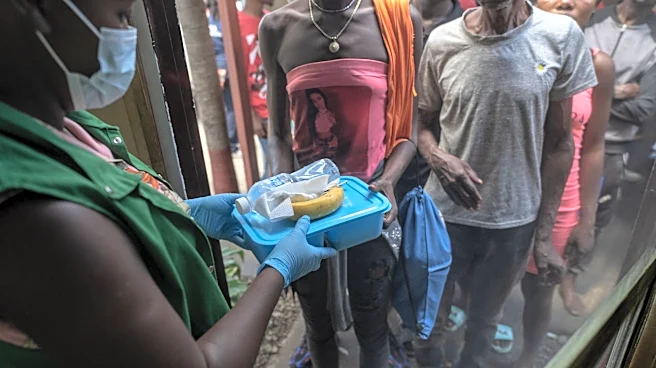
emergency co-ordinator, Anna Halford, states that contact tracing is failing to keep pace with the disease's spread. Most new cases are 'surprise cases' without known epidemiological links, indicating a significant gap in surveillance. The outbreak has claimed over 5,400 lives, and many deaths are occurring within communities rather than treatment centers, further facilitating transmission. MSF's international president, Javid Abdelmoneim, highlighted 'dysfunctions' in the response, including a lack of vital equipment for frontline workers, unpaid personnel, and insufficient fuel for essential services like ambulances. Despite hundreds of millions of dollars from the international community, critical shortcomings persist, and a substantial portion of funds remains unaccounted for.
Why It's Important?
The uncontrolled Ebola outbreak in the DRC poses a significant public health challenge, not only for the affected region but also for global health security. The failure to contain the spread, despite a WHO emergency declaration and substantial international funding, highlights systemic issues in emergency response and resource management. The lack of effective contact tracing and the occurrence of 'surprise cases' suggest a deeper problem in understanding and interrupting transmission chains. This situation underscores the vulnerability of healthcare systems in conflict-affected areas and the critical need for transparent and efficient allocation of aid. The potential for the virus to spread further, especially with community deaths, increases the risk of regional instability and could strain international health resources if not effectively managed. The reported unaccounted funds also raise concerns about accountability and the efficacy of international aid efforts in humanitarian crises.
What's Next?
Urgent improvements in oversight, staffing, and operational support are deemed essential by MSF to bring the Ebola outbreak under control. Statements from Congolese authorities regarding transparency and oversight must translate into tangible changes on the ground. There is a critical need for sustained and consistent resources to be directed effectively, as the issue is not a lack of money but rather its proper utilization. Enhanced surveillance and community engagement are crucial next steps. The international community, including organizations like MSF, will likely continue to press for greater accountability and more efficient deployment of resources to support frontline workers and improve the overall response. Without these fundamental changes, the outbreak is expected to continue its slow but steady spread, presenting ongoing challenges for public health in the DRC.
Beyond the Headlines
The ongoing Ebola crisis in the DRC reveals deeper ethical and logistical challenges in global health emergencies. The 'dysfunctions' and unaccounted funds reported by MSF point to a systemic failure in the governance and execution of humanitarian aid, raising questions about the responsibility of international bodies and local authorities. The fact that frontline workers lack basic equipment and are unpaid, despite significant financial contributions, highlights a profound disconnect between funding and on-the-ground realities. This situation could erode public trust in international aid organizations and governmental responses, potentially hindering future efforts to combat epidemics. Furthermore, the spread of the disease in conflict-affected and rural areas complicates intervention strategies, underscoring the need for integrated approaches that address both health crises and underlying socio-political instability. The lessons from this outbreak are critical for improving future pandemic preparedness and response mechanisms globally.