
What's Happening?
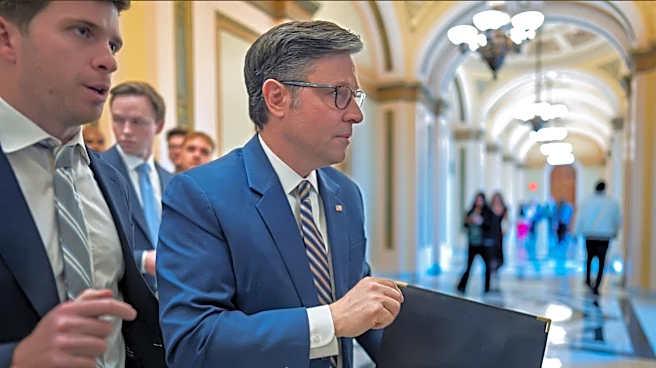
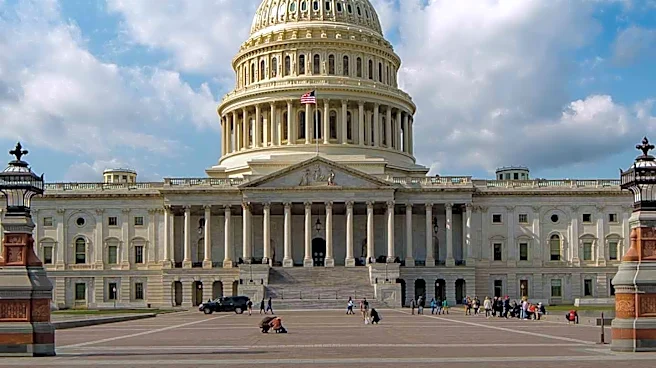
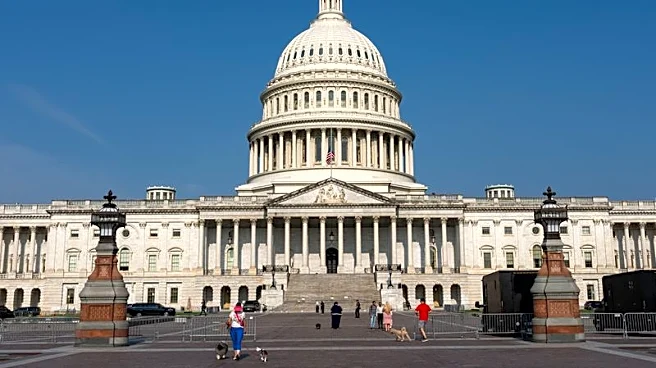
President Trump has indicated that the U.S. government is on the brink of a shutdown as current funding is set to expire on September 30. The House of Representatives recently passed a stopgap funding resolution
intended to keep the government operational until early December. However, the Senate has yet to approve this measure, and both chambers are about to enter their August recess, significantly reducing the time available to finalize a budget. The House will be in recess from July 23 to August 31, and the Senate from August 7 to September 14. This leaves only 11 days when both chambers will be in session simultaneously before the funding deadline. The situation is reminiscent of the previous year's 43-day government shutdown, which caused significant disruptions, particularly in the Department of Homeland Security.
Why It's Important?
The potential government shutdown poses significant risks to various sectors, including federal operations and public services. A shutdown could lead to furloughs of federal employees, delays in government services, and disruptions in sectors reliant on federal funding. The previous shutdown had widespread impacts, including delays at airports and interruptions in Homeland Security operations. The looming deadline underscores the challenges of legislative gridlock and the importance of timely budget agreements. Stakeholders across the economy, from government contractors to public service recipients, could face uncertainty and financial strain if a resolution is not reached promptly.
What's Next?
As the deadline approaches, both the House and Senate will need to prioritize negotiations to pass a funding bill. The Senate's decision on the stopgap measure will be crucial, and any amendments could further delay the process by requiring additional votes in the House. Political leaders may face pressure from constituents and interest groups to avoid a shutdown, potentially influencing the legislative agenda. The outcome will depend on bipartisan cooperation and the ability to reconcile differences in budget priorities. Observers will be watching closely for any signs of compromise or continued stalemate.