





What's Happening?
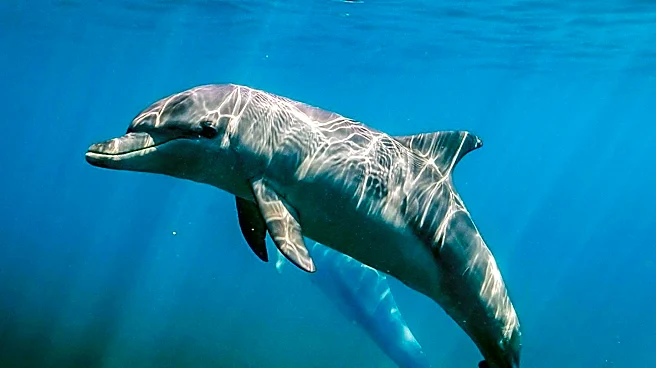
A recent study conducted by researchers from Florida Atlantic University’s Harbor Branch Oceanographic Institute has revealed distinct acoustic behaviors among dolphins off the Atlantic coast of Florida. The study, published in the journal PeerJ, utilized
an autonomous wave glider equipped with a submarine recorder to monitor dolphin activity for 54 days. This method allowed for the collection of nearly 62 hours of acoustic recordings, identifying different patterns between whistles, associated with social communication, and echolocation clicks, linked to foraging and navigation. Whistles were more frequently detected in coastal areas and correlated with factors like water temperature, sound pressure level, chlorophyll-a concentration, and location. Echolocation clicks, conversely, were associated with depth, salinity, sound pressure level, location, and the presence of sound-producing fish. The research team, including Jessica Carvalho, Greg O’Corry-Crowe, and Laurent Chérubin, analyzed 14,974 files, with dolphins appearing in over 11% of the recordings. Whistles accounted for 55.4% of detections, while echolocation made up 29.5%, and both signals were present in the remaining 15.1%.
Why It's Important?
This research provides crucial insights into the complex acoustic landscape of marine environments and its implications for dolphin behavior and conservation efforts in U.S. coastal waters. The differentiation between social communication and foraging signals highlights how dolphins utilize distinct ocean areas for specific activities. This understanding is vital for marine environmental management, particularly in busy coastal zones where marine fauna, vessels, and human activity converge. Identifying areas critical for social interaction versus feeding can inform the establishment of protected zones or regulations to minimize human impact on these sensitive behaviors. The study also points to the potential for dolphins to exploit acoustic cues from their prey, suggesting a sophisticated level of interaction within the marine food web. Furthermore, the finding that dolphin activity was higher in March than April suggests seasonal movements, which could influence how conservation strategies are planned and implemented for resident and migratory dolphin populations along the Atlantic coast of Florida.
What's Next?
The researchers plan to further investigate the relationship between dolphins, sound-producing fish, and human-generated noise to gain a more precise understanding of how this acoustic interplay shapes life beneath the ocean's surface. This next phase of research will likely involve more targeted studies on the impact of marine traffic noise on dolphin communication and foraging behaviors. The insights gained could lead to the development of more effective mitigation strategies for noise pollution in critical dolphin habitats. Additionally, future campaigns using autonomous gliders or other acoustic monitoring technologies could expand upon these findings, refining the predictive maps of suitable habitats for different dolphin activities. The study's limitations, such as the inability to identify specific dolphin species solely from sound and the single deployment of the glider, suggest that subsequent research will aim to address these gaps, potentially through multi-season deployments and advanced acoustic analysis techniques to differentiate species.
Beyond the Headlines
The study's findings underscore a broader ecological principle: the ocean is a complex network of signals where every sound can provide valuable information for those emitting, receiving, or even attempting to avoid detection. This 'everyone is spying on everyone else' dynamic highlights the intricate sensory world of marine life, where acoustic cues play a role akin to visual or chemical signals in terrestrial ecosystems. The potential for noise pollution from human activities, such as shipping, to mask these vital signals raises ethical concerns about our impact on marine communication and survival. This research also exemplifies the power of passive acoustic monitoring as a non-invasive tool for studying animal behavior in environments where direct observation is challenging. It pushes the boundaries of how we understand and protect marine ecosystems, moving beyond visual surveys to embrace the rich auditory information that defines the underwater world. The long-term implications involve a shift towards more acoustically informed conservation policies and a deeper appreciation for the 'hidden language' of the ocean.