




What's Happening?
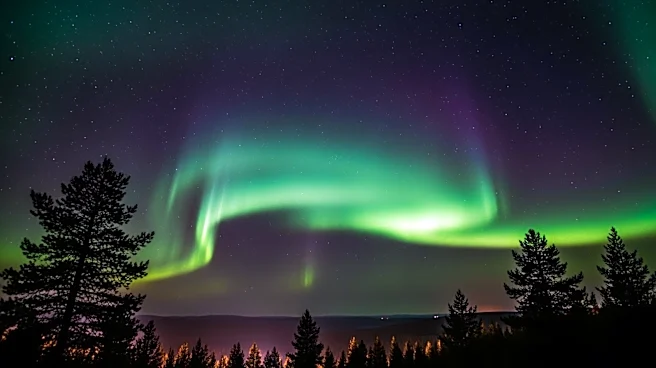
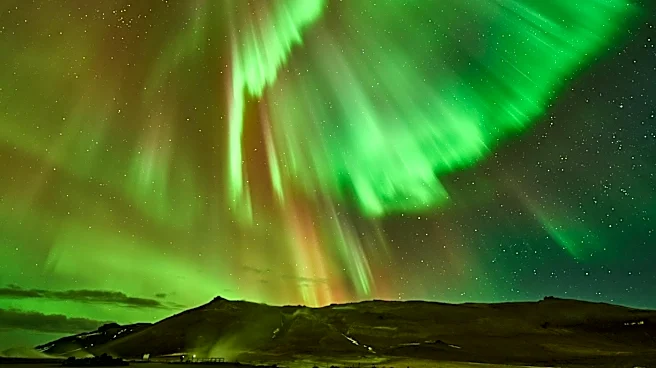
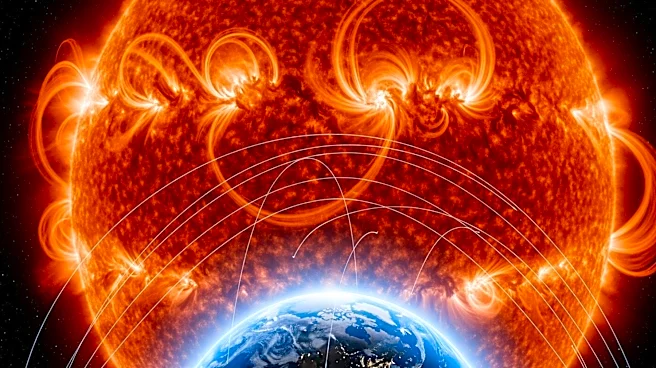
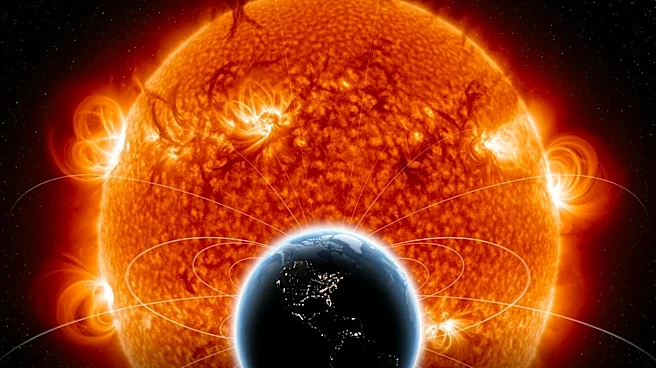
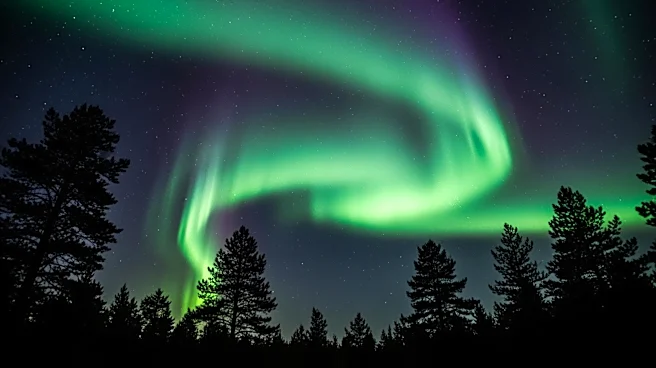
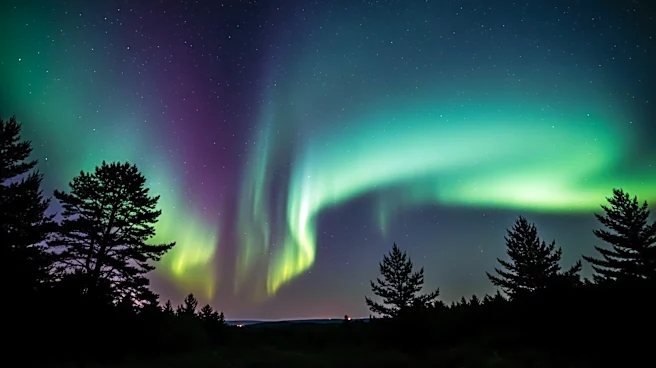
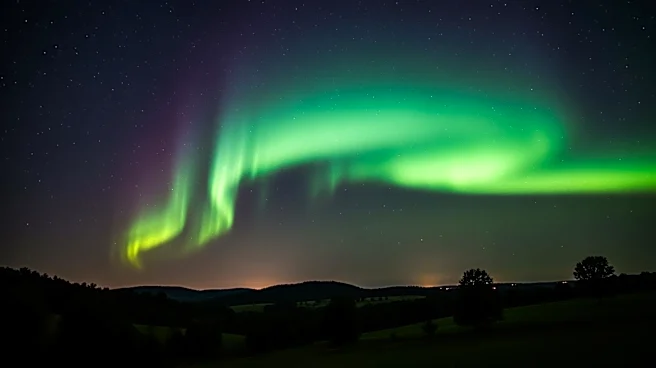
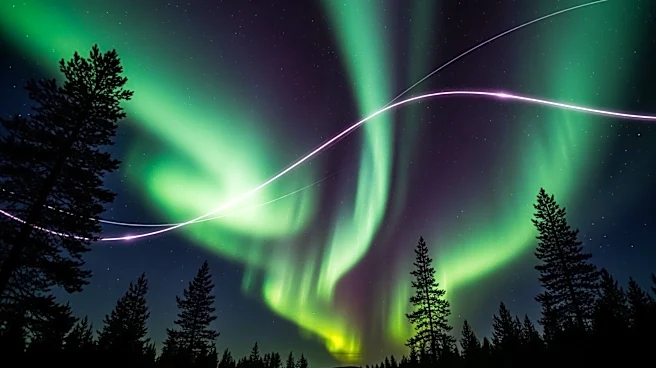
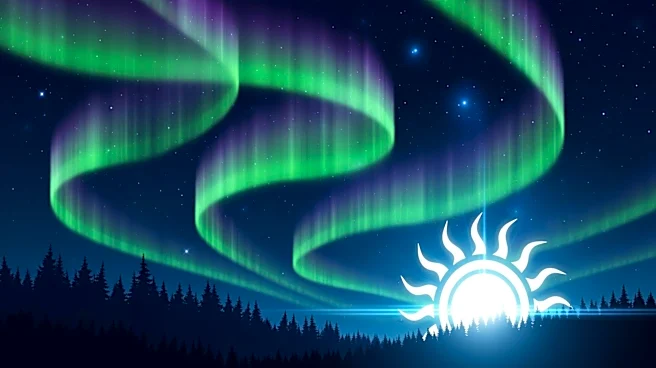
The National Oceanic and Atmospheric Administration (NOAA) has issued a Strong Geomagnetic Storm (G3) watch, indicating that the northern lights could be visible as far south as Massachusetts. This rare event is due to three coronal mass ejections (CMEs)
from the Sun, with one having an Earth-directed component. The geomagnetic activity is expected to have a Planetary K-index (Kp) of seven, which allows the auroras to extend further from the poles. The best viewing times are predicted to be between 10 p.m. and 2 a.m., with the storm peaking on June 4 and 5. However, partly cloudy skies may hinder visibility in some areas.
Why It's Important?
The potential visibility of the northern lights in regions like Massachusetts is a rare occurrence, typically reserved for areas much closer to the poles. This event highlights the impact of solar activity on Earth's geomagnetic environment, which can have broader implications for satellite operations and power grids. For residents and tourists, it offers a unique opportunity to witness a natural phenomenon that is not commonly seen in these latitudes. The event also underscores the importance of space weather monitoring and forecasting in mitigating potential disruptions to technological systems.
What's Next?
As the geomagnetic storm progresses, NOAA and other space weather agencies will continue to monitor solar activity and provide updates on the storm's development. Observers are advised to check local weather conditions and find locations with minimal light pollution for the best viewing experience. The event may prompt increased interest in space weather phenomena and their effects on Earth, potentially leading to more public engagement and educational opportunities.