
What's Happening?
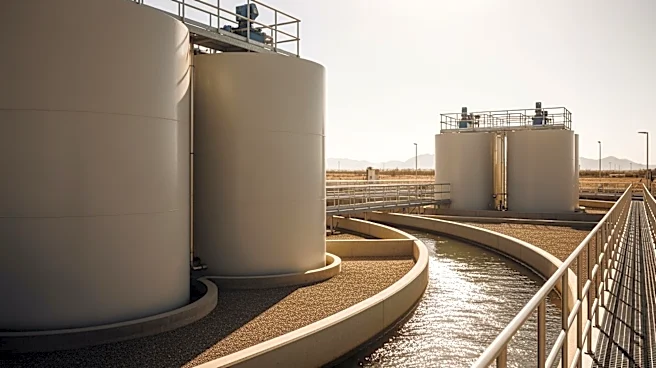
The 24th Street Water Treatment Plant Rehabilitation project in Phoenix, led by PCL Construction, has been awarded the 2026 Water Treatment Project of the Year by the Arizona Water Association. This recognition
was announced during the association's 99th Annual Conference and Exhibition, which highlights projects demonstrating innovation, technical complexity, and long-term community benefits. The project, executed in partnership with Carollo Engineers for the City of Phoenix, focused on enhancing system reliability and resilience at a critical treatment facility serving the northern parts of the city. The upgrades are designed to help manage ongoing drought conditions and reductions in Colorado River supplies, ensuring consistent water service to approximately 400,000 residents. Despite challenges such as pandemic-era supply chain issues, the project was completed on time, maintaining uninterrupted water service.
Why It's Important?
This award underscores the critical importance of modernizing infrastructure to address environmental challenges such as drought. The project not only ensures the reliability of water supply to a significant population in Phoenix but also sets a precedent for similar initiatives in other regions facing water scarcity. By successfully navigating supply chain constraints and maintaining service continuity, the project demonstrates effective collaboration between contractors, engineers, and city stakeholders. This could inspire other municipalities to invest in infrastructure upgrades, potentially leading to widespread improvements in water management and resilience against climate change impacts.
What's Next?
Following this recognition, other cities may look to Phoenix's approach as a model for their own infrastructure projects. The success of the 24th Street Water Treatment Plant Rehabilitation could lead to increased funding and support for similar projects nationwide. Stakeholders might also explore further innovations in water management technology and strategies to enhance resilience against environmental challenges. Additionally, the project could influence policy discussions on infrastructure investment priorities, particularly in regions vulnerable to drought and water shortages.