
What's Happening?
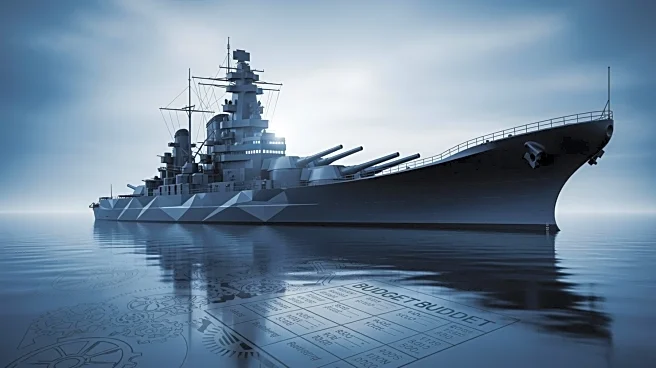
The U.S. Navy's announcement of a new Trump-class battleship design has sparked debate over its feasibility and cost. The proposed battleship, weighing 35,000 tonnes, is expected to rival small amphibious
assault ships in size. The Navy has awarded initial design contracts to Bath Iron Works, Huntington Ingalls Industries, and Leidos' Gibbs & Cox. However, challenges such as labor shortages and supply chain issues have delayed current naval shipbuilding programs. The Navy plans to begin steel-cutting for the first Trump-class hull in the early 2030s, with delivery expected in the mid-2030s. The cost of the lead ship is estimated to exceed $10 billion, comparable to other major naval assets. Analysts question the battleship's survivability in modern warfare, where unmanned platforms and hypersonic missiles pose significant threats.
Why It's Important?
The development of the Trump-class battleship represents a significant investment in U.S. naval capabilities, with potential implications for defense spending and military strategy. The high cost of the battleship could impact budget allocations for other defense projects, especially as the Navy's budget is projected to increase significantly by the mid-2030s. The decision to proceed with the Trump-class battleship will influence the U.S. Navy's ability to adapt to evolving warfare technologies, such as unmanned systems and hypersonic missiles. The battleship's size and prestige may make it a target in conflicts, raising questions about its strategic value and effectiveness in future naval engagements.
What's Next?
Future presidential administrations will need to decide whether to continue with the Trump-class battleship program or allocate resources to other defense priorities. The Navy will face budgetary pressures as it balances the cost of the battleship with other planned expenditures. The evolving nature of naval warfare may prompt a reevaluation of the battleship's role and effectiveness. Stakeholders, including defense contractors and military strategists, will likely engage in discussions about the best path forward for U.S. naval capabilities.
Beyond the Headlines
The Trump-class battleship's development raises broader questions about the U.S. military's approach to modernization and innovation. The emphasis on large, high-cost vessels may need to be reconsidered in light of advancements in unmanned and missile technologies. The program also highlights the challenges of maintaining a skilled workforce and efficient supply chains in the defense sector. The decision to proceed with the battleship could set a precedent for future military procurement strategies and influence global perceptions of U.S. naval power.