






What's Happening?
India and Taiwan are actively exploring opportunities to deepen their cooperation across the semiconductor value chain. This initiative is driven by intensifying technological competition and geopolitical tensions that are reshaping global supply chains,
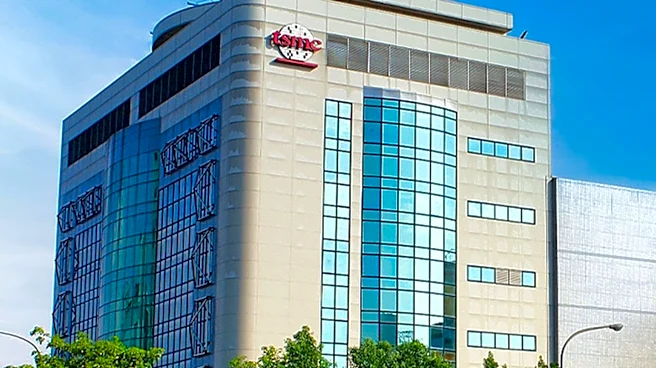
making semiconductors a critical element of economic security and strategic resilience in the Indo-Pacific. Taiwan, a global leader in advanced chip manufacturing, is central to the semiconductor ecosystem. Concurrently, India is accelerating its efforts to develop a domestic semiconductor ecosystem through the India Semiconductor Mission, aiming to become a trusted destination for electronics manufacturing and diversified technology supply chains. Discussions between the two sides focus on areas such as chip design, fabrication, packaging, testing, talent development, and supply-chain resilience. The Observer Research Foundation (ORF) is facilitating a roundtable with scholars, industry experts, policymakers, and strategic analysts from both countries to examine these collaboration opportunities.
Why It's Important?
A deeper semiconductor partnership between India and Taiwan holds significant implications for U.S. economic security and strategic interests in the Indo-Pacific. By diversifying the global semiconductor supply chain away from over-concentration, particularly in the context of U.S.-China technological competition, this collaboration can enhance resilience and reduce vulnerabilities to geopolitical disruptions. For the U.S., strengthening semiconductor manufacturing capabilities in allied and partner nations like India and Taiwan aligns with its broader strategy to secure critical technology supply chains. This partnership could also foster innovation and create new economic opportunities, potentially leading to increased foreign direct investment and technological exchange. The development of India's domestic semiconductor industry, supported by Taiwan's expertise, could create a more robust and geographically diverse manufacturing base, benefiting global technology markets and reducing reliance on single points of failure.
What's Next?
The ongoing discussions and roundtables between India and Taiwan are expected to identify concrete areas for collaboration and develop mechanisms to facilitate a deeper semiconductor partnership, despite the absence of formal diplomatic relations. This could involve establishing institutional, regulatory, and business frameworks to unlock the potential of their semiconductor relationship. Future steps may include Taiwanese investment in India, moving beyond electronics assembly towards advanced manufacturing, semiconductor fabrication, research and development, and higher-value segments of the technology supply chain. The focus will be on translating complementary capabilities into sustainable commercial partnerships that contribute to regional economic resilience and stability. The outcomes of these collaborations will be closely watched by global stakeholders, particularly in the context of evolving U.S.-China technological competition and 'China Plus One' strategies.
Beyond the Headlines
The push for a deeper India-Taiwan semiconductor partnership transcends mere economic cooperation; it represents a strategic realignment in the global technology landscape. This initiative highlights the growing recognition of semiconductors as a geopolitical tool and a cornerstone of national security. The collaboration could serve as a model for other nations seeking to de-risk their supply chains and build technological self-sufficiency. Furthermore, it underscores the ethical imperative of fostering resilient and diversified technology networks to prevent single points of failure from being exploited for political leverage. The emphasis on talent development and advanced manufacturing in India, with Taiwanese guidance, could also lead to significant socio-economic benefits, creating high-skilled jobs and fostering technological innovation within the region, thereby contributing to a more equitable distribution of technological capabilities globally.