




What's Happening?
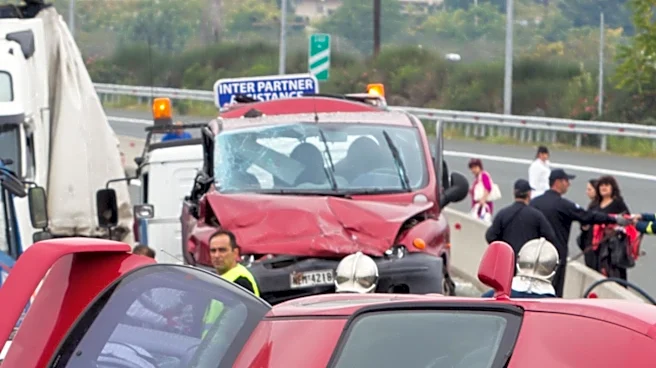
A fatal head-on collision on Interstate 70 near the Utah border in July has been determined an “intentional act” by the driver, Briana Brink, 32, of Colorado Springs, according to a news release from the Colorado State Patrol. A toxicology report conducted
by the Mesa County Coroner’s Office revealed that Brink had a blood alcohol content (BAC) of 0.235 percent at the time of the incident. On July 20, Brink was driving a Subaru the wrong way on the interstate, west of Grand Junction, when she collided head-on with a pickup truck. The crash resulted in serious injuries to three adults and three children in the pickup truck. Colorado State Patrol had initially responded to reports of a sedan speeding while traveling in the wrong direction on the interstate. The news release did not provide specific details on why the Mesa County coroner concluded the act was intentional.
Why It's Important?
This incident underscores the severe consequences of impaired driving and reckless behavior on public roadways, particularly when combined with what authorities have deemed an intentional act. The high blood alcohol content of the driver highlights the ongoing public safety challenge posed by individuals operating vehicles under the influence. The serious injuries sustained by multiple occupants, including children, in the other vehicle illustrate the devastating impact such actions have on innocent lives and families. This event also brings to light the complexities surrounding intentional acts in traffic incidents, raising questions about mental health and crisis intervention. The Colorado State Patrol's reminder about the suicide and crisis hotline (988) suggests a potential link between the driver's actions and mental health struggles, emphasizing the broader societal need for accessible support systems.
What's Next?
While the immediate aftermath involves the recovery of the injured individuals and the ongoing investigation into the specifics of the crash, the determination of an “intentional act” by the Mesa County Coroner’s Office may lead to further scrutiny. Although the driver is deceased, such a finding could influence public discourse on road safety, mental health resources, and the legal frameworks surrounding vehicular incidents. Law enforcement agencies and public health organizations may use this case to reinforce campaigns against impaired driving and to promote awareness of mental health support services. The incident could also prompt discussions among policymakers regarding preventative measures for wrong-way driving and interventions for individuals exhibiting signs of distress that could lead to dangerous actions on public roads.
Beyond the Headlines
The classification of this fatal collision as an “intentional act” by the Mesa County Coroner’s Office introduces a profound and somber dimension beyond a typical traffic accident. It shifts the narrative from mere negligence to a potentially deliberate action, raising significant ethical and societal questions about individual responsibility, mental health crises, and the role of public safety. The high BAC further complicates the understanding of intent, as severe intoxication can impair judgment and decision-making. This case highlights the critical intersection of substance abuse and mental health, suggesting a need for integrated approaches to address these issues. The tragic outcome for the innocent victims in the pickup truck serves as a stark reminder of the ripple effects of such actions, extending beyond the immediate incident to impact families and communities, and prompting a broader reflection on how society can better identify and support individuals at risk of causing harm to themselves or others.