



What's Happening?
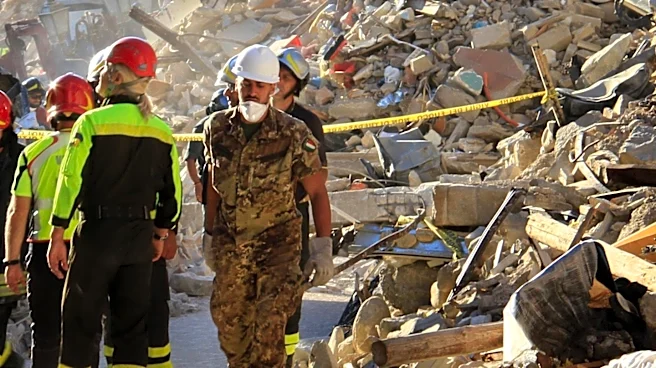
France is actively working to strengthen its earthquake preparedness by drawing lessons from past events, conducting simulation exercises, and learning from international experiences. Research indicates that decisions made in the immediate aftermath of
an earthquake have a lasting impact on reconstruction efforts, and the transition from short-term relief to long-term recovery presents a significant governance challenge. This was evident after the 2019 Le Teil earthquake, where local stakeholders faced exhaustion and the dual task of rebuilding while maintaining daily life. The challenge for countries with infrequent seismic activity is not just acknowledging the risk, but understanding its real-world implications and developing effective response capacities. The FASTER project, funded through the Union Civil Protection Mechanism (UCPM), is a concrete example of this approach, bringing together civil protection authorities and experts from several European countries to improve and harmonize Rapid Response to Earthquakes (RRE) capabilities.
Why It's Important?
The initiative to enhance earthquake preparedness in France, particularly through international collaboration and learning, is crucial for mitigating the impact of low-frequency, high-impact events. For countries where major earthquakes are rare, the lack of collective experience can hinder effective response and recovery. By studying past events and engaging in simulation exercises, France aims to identify weaknesses in its crisis management systems and improve coordination. The emphasis on international learning, rather than mere copying, allows for the adaptation of best practices to specific national contexts, considering differences in governance, resources, and operational practices. This proactive approach can significantly reduce human and economic losses, ensuring a more efficient transition from emergency response to long-term reconstruction, and ultimately safeguarding communities and critical infrastructure.
What's Next?
France's ongoing efforts will focus on capitalizing on lessons learned from moderate earthquakes and simulation exercises, ensuring that experience is not lost once a crisis or exercise concludes. The country will continue to leverage international cooperation frameworks like the UCPM and the Union for the Mediterranean (UfM) to share knowledge, strengthen capacities, and harmonize practices across borders. Projects like FASTER will further develop and integrate Rapid Response to Earthquakes (RRE) tools, enabling civil protection actors to quickly assess potential losses and plan operational responses. The development of a dedicated Euro-Mediterranean Community of Practice will support ongoing experience sharing. This strategic direction aims to build a robust culture of preparedness for infrequent but potentially devastating hazards, ensuring that France is better equipped to respond to future seismic events.
Beyond the Headlines
The French approach to earthquake preparedness highlights a broader philosophical shift in disaster risk reduction: moving from reactive response to proactive, continuous learning and adaptation. The recognition that even moderate earthquakes can expose systemic weaknesses underscores the importance of comprehensive preparedness strategies that go beyond immediate emergency relief. The emphasis on international learning and interoperability, particularly through initiatives like INSARAG guidelines for search and rescue, points to the growing need for global standardization in disaster response. This collaborative model fosters a shared understanding of risks and best practices, transcending national borders. Furthermore, the focus on integrating emergency and reconstruction phases, as seen in Italy's model, suggests a more holistic approach to disaster management that considers the long-term social and economic recovery of affected regions, promoting resilience and sustainable development.