






What's Happening?
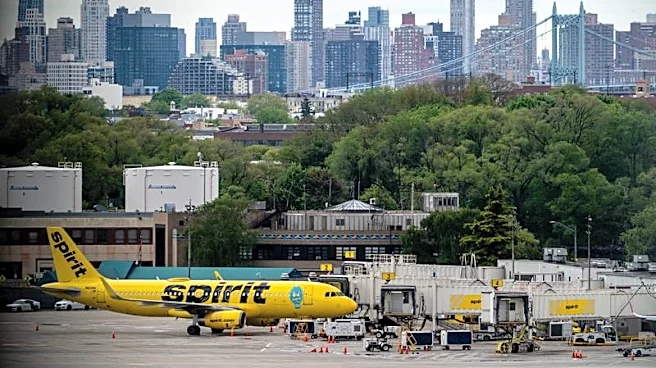
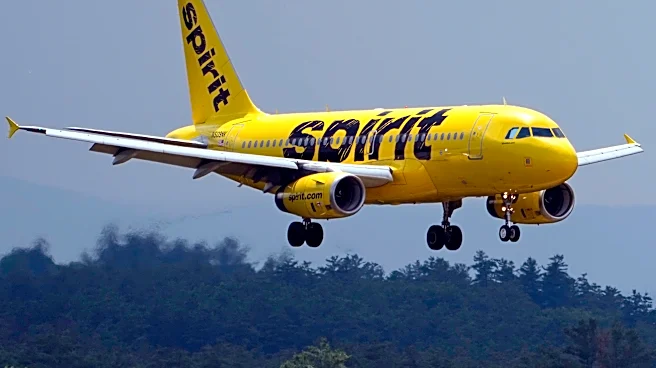
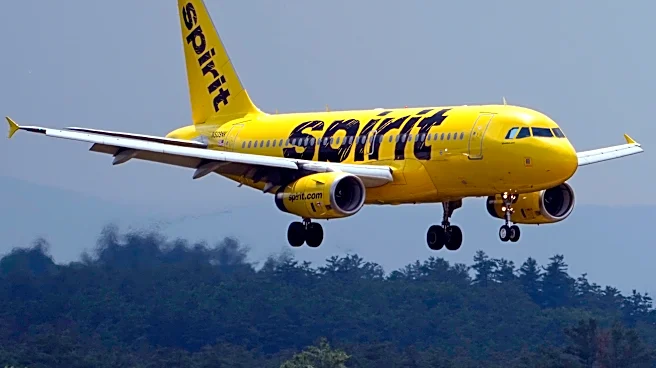
Spirit Airlines has abruptly ceased operations, leaving passengers stranded and approximately 17,000 employees without jobs. The budget airline, known for its bright yellow planes, announced the shutdown due to rising oil prices and other financial pressures.
The closure follows unsuccessful attempts to restructure the business and a blocked merger deal with JetBlue by the Biden administration. Passengers at Los Angeles International Airport (LAX) were left scrambling to find alternative travel arrangements, with many demanding refunds. The Trump administration had considered a $500 million bailout for Spirit, but no agreement was reached.
Why It's Important?
The shutdown of Spirit Airlines, a major player in the budget airline sector, highlights the vulnerability of airlines to economic pressures such as fluctuating oil prices. This development affects not only the airline's employees but also the broader travel industry, as passengers face increased travel costs and limited options. The situation underscores the challenges faced by low-cost carriers in maintaining financial stability amidst rising operational costs. The blocked merger with JetBlue also reflects regulatory hurdles in the airline industry, impacting potential consolidation efforts that could have provided financial relief.
What's Next?
Affected passengers are seeking refunds and alternative travel options, while the airline works to process refunds and rebase crew members. The shutdown may prompt regulatory reviews of airline mergers and financial aid policies. Other airlines, like United and JetBlue, have offered discounted fares to assist stranded passengers. The broader airline industry may see increased scrutiny on financial practices and merger regulations as stakeholders assess the impact of Spirit's closure.