
What's Happening?
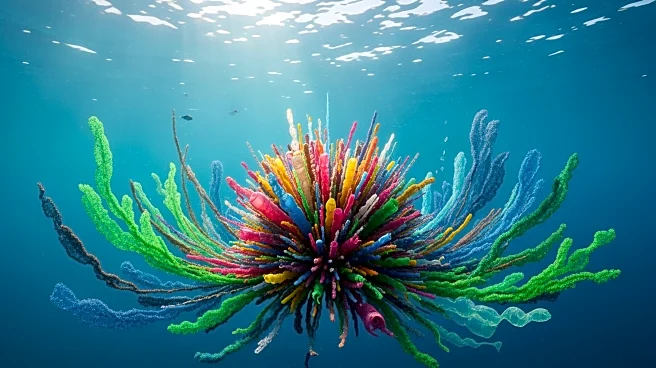
Scientists have discovered that the Great Pacific Garbage Patch, traditionally seen as a major environmental issue, is now hosting thriving colonies of marine life. Research conducted on 105 pieces of large
plastic debris from the North Pacific Subtropical Gyre revealed that 98% of these items had marine life attached. The study identified 46 different types of small animals, including barnacles, crabs, and anemones, with 37 species typically found near coastlines. This indicates that animals usually living on rocks or the seabed are now surviving far from shore, using plastic as a new habitat. The most heavily colonized items were ropes and nets, which provide more space and protection for marine life. This phenomenon is reshaping the understanding of how plastic pollution impacts marine ecosystems.
Why It's Important?
The findings highlight a complex dimension of plastic pollution, where debris is not only a pollutant but also a new habitat for marine life. This development could have significant ecological implications, as it suggests that marine species are adapting to human-induced changes in their environment. The ability of coastal species to survive and reproduce on plastic debris in the open ocean could alter marine biodiversity and ecosystem dynamics. This adaptation might also influence the distribution of species across the ocean, potentially affecting fisheries and marine conservation efforts. Understanding these changes is crucial for developing effective strategies to manage plastic pollution and protect marine ecosystems.
What's Next?
Further research is needed to understand the long-term ecological impacts of marine life colonizing plastic debris. Scientists will likely continue to monitor these communities to assess their growth, reproduction, and interactions with other marine species. This research could inform policy decisions on plastic waste management and marine conservation. Additionally, there may be increased efforts to clean up oceanic garbage patches, balancing the need to remove pollutants with the potential ecological roles these debris play. Stakeholders, including environmental organizations and governments, may need to collaborate on innovative solutions to address the dual challenges of pollution and habitat creation.
Beyond the Headlines
The adaptation of marine life to plastic debris raises ethical and environmental questions about human impact on natural ecosystems. It challenges the perception of plastic solely as a pollutant, suggesting it can also serve as a substrate for life. This dual role complicates efforts to address ocean pollution, as removing debris could disrupt newly formed ecosystems. The situation underscores the need for comprehensive approaches that consider both environmental protection and the unintended consequences of human activities. It also highlights the resilience of marine species and their ability to adapt to changing conditions, offering insights into the broader impacts of climate change and human influence on the natural world.