


What's Happening?
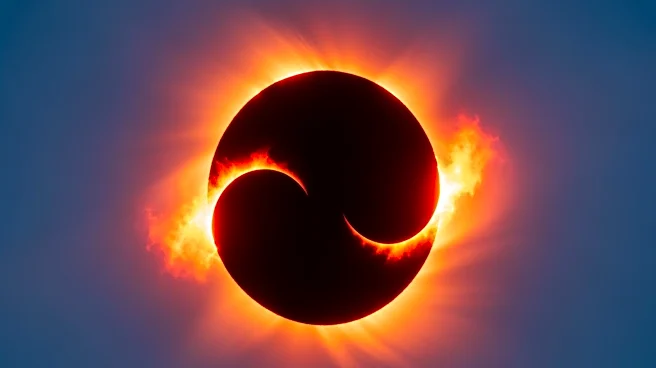
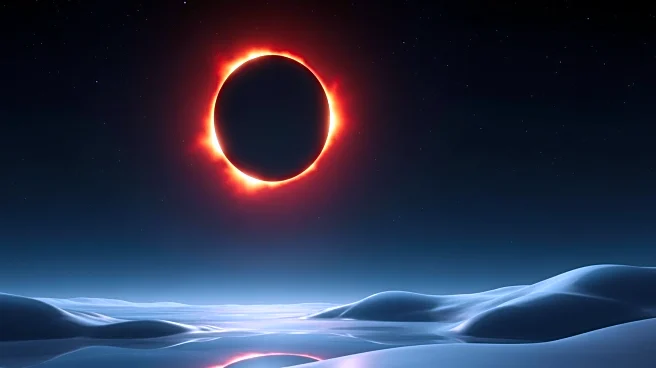
A 'ring of fire' solar eclipse is set to occur on February 17, 2026, primarily visible from a remote region of Antarctica. This annular solar eclipse will create a striking visual effect where the moon covers the center of the sun, leaving a glowing ring of sunlight.
The eclipse will obscure up to 96% of the sun's center for over two minutes along a narrow path. While the full eclipse will be visible only in Antarctica, a partial eclipse can be observed in parts of the southern hemisphere, including southern Africa and the southern tip of Latin America. Experts caution against viewing the eclipse without proper eye protection.
Why It's Important?
This solar eclipse is a significant astronomical event, offering a rare opportunity for scientists and enthusiasts to study the phenomenon in a unique environment like Antarctica. The event also highlights the importance of public awareness regarding eye safety during solar eclipses. For regions in the southern hemisphere, the eclipse provides a chance to engage the public in astronomy and science education. Additionally, such celestial events can boost tourism in areas where the eclipse is visible, although the remote location of this particular eclipse limits that potential.