








What's Happening?
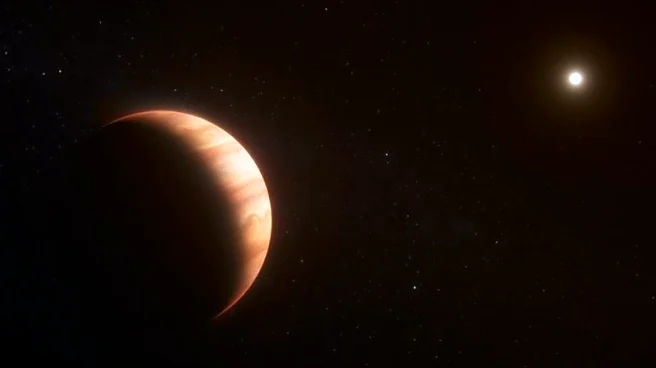
Scientists have identified a planet named GJ 3378b, located approximately 25 light-years from Earth, which could be a significant candidate in the search for extraterrestrial life. This 'super-Earth' orbits within the habitable 'Goldilocks' zone of a nearby
red dwarf star, where conditions might allow for the presence of liquid water. The planet is about twice the size of Earth and receives roughly 90% of the radiation that Earth gets from the sun. The discovery was facilitated by advanced instruments such as the Habitable-zone Planet Finder and the NEID spectrometer. These tools have enabled researchers to study the planet's potential to support life, focusing on whether it possesses an atmosphere that could regulate temperatures and protect against harmful radiation.
Why It's Important?
The potential discovery of an atmosphere on GJ 3378b is crucial because it could indicate the planet's ability to support life. An atmosphere can help maintain stable temperatures and protect the planet from harmful radiation, increasing the likelihood of liquid water. This discovery not only advances the search for life beyond Earth but also enhances our understanding of planetary atmospheres and their role in supporting life. The proximity of GJ 3378b, being relatively close in cosmic terms, allows for more detailed study, which could provide insights into the conditions necessary for life and inform our understanding of Earth's own life-supporting environment.
What's Next?
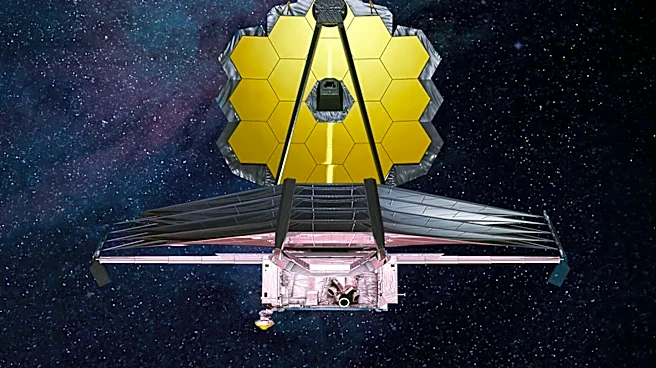
Future observations using both space- and ground-based observatories are planned to determine whether GJ 3378b has an atmosphere. If confirmed, the planet could become a primary target for searching biosignatures and other indicators of habitability. This ongoing research will contribute to the broader field of exoplanet studies, potentially leading to breakthroughs in our understanding of how life might arise elsewhere in the universe.