
What's Happening?
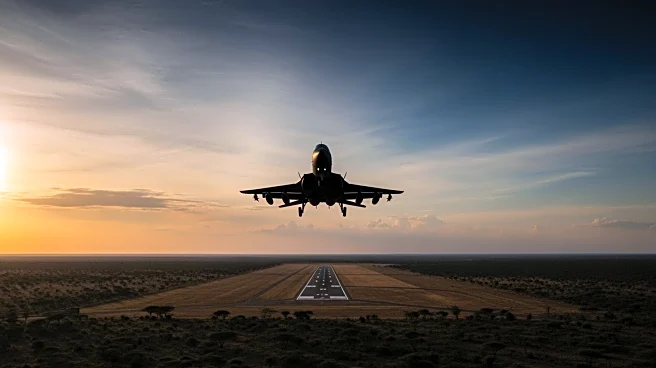
A Nigerian Air Force plane made an emergency landing in Burkina Faso on Monday due to an unspecified in-flight emergency. The aircraft, en route to Portugal, landed in the city of Bobo-Dioulasso, which
had the nearest available airfield. The incident has been described by the Alliance of Sahel States, which includes Burkina Faso, Mali, and Niger, as a violation of Burkina Faso's airspace. In response, the alliance has placed its air and anti-air defenses on high alert, with orders to neutralize any aircraft violating their airspace. The Nigerian Air Force confirmed the emergency landing, stating that it was conducted in accordance with international safety procedures. The crew and passengers, consisting of two crew members and nine passengers, were reported safe and received cordial treatment from Burkina Faso authorities.
Why It's Important?
This incident underscores the fragile geopolitical dynamics in the Sahel region, where airspace violations can quickly escalate tensions. The emergency landing comes amid strained relations between the Alliance of Sahel States and Nigeria, following Nigeria's involvement in reversing a coup in Benin. The heightened alert status of Burkina Faso's defenses reflects the region's sensitivity to perceived threats and the potential for military responses. This situation could impact regional security and diplomatic relations, particularly if further incidents occur. The response from Burkina Faso and its allies highlights the importance of maintaining clear communication and protocols to prevent misunderstandings that could lead to conflict.
What's Next?
The immediate focus will likely be on diplomatic discussions to address the airspace violation and ensure such incidents are managed without escalation. The Nigerian Air Force may engage in talks with Burkina Faso and the Alliance of Sahel States to clarify the circumstances of the emergency landing and reinforce protocols for future incidents. Additionally, regional leaders might seek to strengthen communication channels to prevent similar occurrences from escalating into larger conflicts. Monitoring the situation for any retaliatory measures or changes in military postures will be crucial in the coming days.