



What's Happening?
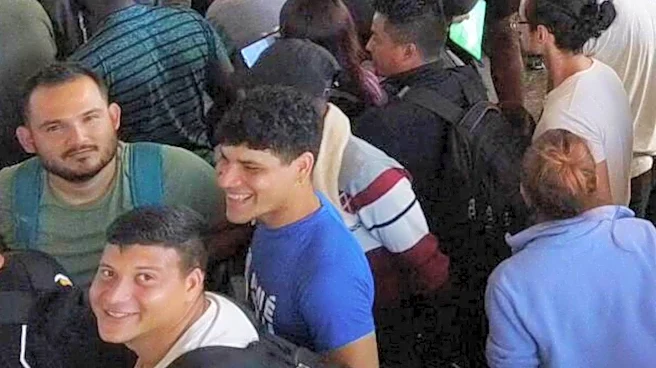
Approximately 300 Korean workers, who were among 475 individuals detained during an immigration raid at a battery plant construction site in Georgia last year, are initiating administrative claim procedures against the administration of President Trump.
This action marks the first legal response to what is described as the largest single-workplace immigration raid during President Trump's second term. The raid, which occurred on September 4 last year at a plant jointly built by Hyundai Motor Group and LG Energy Solution, involved U.S. immigration authorities detaining workers, with video footage showing agents using handcuffs and shackles. These images drew criticism in both Korea and the United States for excessive enforcement. The workers' claims allege unlawful detention in ICE facilities, subjection to conditions undermining human dignity, and suffering from intentional emotional distress, humiliation, and lasting psychological trauma. A Korean American attorney representing the workers plans to submit these claims to nine federal agencies, including the Department of Homeland Security, Immigration and Customs Enforcement, and the Justice Department, by the end of this year. The U.S. government maintains the raid was lawful, citing a court-issued search warrant as part of an investigation into unlawful employment practices and other serious federal crimes.
Why It's Important?
This legal action by Korean workers against the Trump administration highlights significant issues surrounding immigration enforcement practices in the U.S., particularly concerning large-scale workplace raids. The claims of unlawful detention and psychological trauma could set a precedent for how future immigration enforcement operations are conducted and the accountability of federal agencies. For U.S. industries, especially those with international partnerships like the Hyundai-LG joint venture, such incidents can create concerns about labor stability and the treatment of foreign workers, potentially impacting investment and operational decisions. The case also brings to the forefront the debate over the balance between national security interests, immigration law enforcement, and human rights. The involvement of multiple federal agencies in the administrative claims process underscores the complex legal and governmental implications of such raids, potentially leading to policy reviews or reforms regarding the treatment of detained individuals and the scope of enforcement actions. The international attention on this case, stemming from criticism in both Korea and the U.S., could influence diplomatic relations and perceptions of the U.S. as a destination for foreign labor and investment.
What's Next?
The administrative claims are a mandatory precursor to potential group litigation against the Trump administration, indicating that a lawsuit is likely if the administrative process does not yield satisfactory results for the workers. The claims are expected to be submitted to nine federal agencies by the end of this year. Following submission, these agencies will review the allegations, which could lead to internal investigations, settlements, or denials. The U.S. government's stance that the raid was lawful, based on a court-issued search warrant for unlawful employment practices, suggests a potential legal battle. The outcome of these administrative claims and any subsequent litigation could influence future immigration enforcement policies and practices, particularly concerning large-scale workplace operations and the treatment of detained individuals. It may also prompt discussions within Congress regarding oversight of immigration agencies and the protection of workers' rights. Additionally, the case could impact the reputation of U.S. companies and their international partners, potentially leading to increased scrutiny of labor practices and supply chains.
Beyond the Headlines
The legal challenge initiated by the Korean workers extends beyond immediate compensation, touching upon deeper ethical and legal dimensions of immigration enforcement. The allegations of 'unlawful detention' and 'intentional emotional distress' raise fundamental questions about due process and human dignity within the U.S. immigration system. This case could serve as a critical examination of the powers exercised by federal agencies like ICE and CBP, particularly in the context of workplace raids, and whether current protocols adequately safeguard the rights of all individuals, regardless of their immigration status. The incident also highlights the vulnerability of foreign workers in the U.S. and the potential for exploitation or mistreatment, prompting a broader conversation about labor protections and international labor agreements. Furthermore, the public outcry and criticism in both Korea and the U.S. underscore the cultural and societal impact of such enforcement actions, potentially influencing public opinion and political discourse on immigration reform. The long-term shifts could include increased advocacy for immigrant rights, stricter oversight of enforcement agencies, and a reevaluation of the economic and social costs of aggressive immigration policies.