




What's Happening?
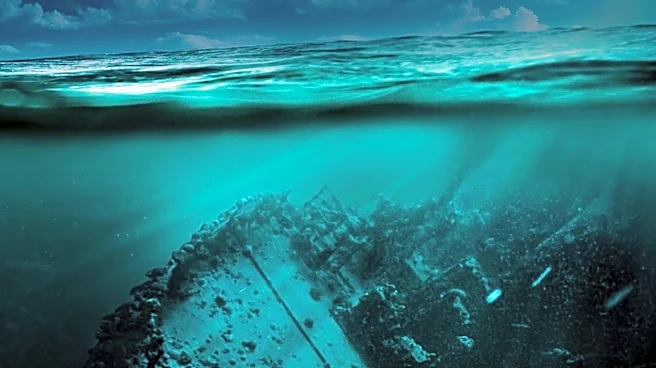
The identity of a shipwreck off the Kent coast, which had remained a mystery for nearly five decades, has been definitively established. An Anglo-European investigation confirmed the vessel as the Belgian fishing boat Hosanna, which disappeared with its
crew in 1980. The case was resolved through collaborative efforts involving Dutch maritime researchers and British wreck researcher Mark Lewis of Mutiny Diving. Two dives were conducted at the site, with Mutiny Diving first investigating the wreck in August and confirming its identity through a second examination last month. The Hosanna was a 25-meter steel fishing vessel built in Zeebrugge in 1965 and sold to British company Minerva Fisheries Ltd shortly before its disappearance. It departed Plymouth on February 14, 1980, bound for the Netherlands but never arrived. No distress signal was transmitted, and no survivors were found, though a liferaft was discovered near the Goodwin Sands on February 16, 1980. The missing crew included skipper Germain Ackx, his son Piet Ackx, Hector Snauwaert, Pieter Guijt, and Pieter's 14-year-old nephew, Pieter Albertus Guijt. The renewed investigation was led in the Netherlands by maritime researcher Cees Meeldijk and Stichting Onderzoek Maritieme Vermisten (SOMV).
Why It's Important?
The resolution of the Hosanna shipwreck mystery holds significant importance for the families of the five crew members who vanished in 1980. For 46 years, these families lived without definitive answers regarding the fate of their loved ones, enduring false leads and unconfirmed sightings. The confirmed identification of the vessel provides closure and a tangible location for remembrance, transforming an unknown tragedy into a recognized maritime loss. This collaborative Anglo-European effort highlights the value of international cooperation in maritime research and historical investigations, demonstrating how shared expertise and resources can bring resolution to long-standing cold cases. The meticulous process of cross-referencing historical records with underwater observations underscores the dedication required to solve such complex maritime puzzles. Furthermore, the event serves as a poignant reminder of the inherent dangers faced by those working at sea and the lasting impact of maritime disasters on communities.
What's Next?
Following the identification of the Hosanna, members of the Guijt family, relatives of two of the missing crew members, laid floral tributes on the sea above the wreck. This act of remembrance marks a significant step towards closure for the affected families. While the vessel's identity is now confirmed, the exact cause of its sinking remains unknown. Investigators hope that further study of the wreck and additional archival examination may provide answers regarding the sequence of events during its final hours. The wider investigation is being documented by Dutch public broadcaster EO (Evangelische Omroep), with a documentary expected to be shown in the Netherlands in June 2027. This documentary will likely bring broader public awareness to the story of the Hosanna and the efforts to solve its mystery, potentially encouraging further research into other unidentified shipwrecks.
Beyond the Headlines
The solving of the Hosanna shipwreck mystery extends beyond a simple identification; it touches upon the profound human need for closure and understanding in the face of loss. For decades, the families of the missing crew members lived with uncertainty, a psychological burden that can be as heavy as grief itself. The confirmation of the wreck's identity provides a focal point for their mourning and a tangible connection to their loved ones. This case also highlights the evolving nature of maritime archaeology and historical research, where modern diving technology and international collaboration can unlock secrets that were previously thought lost to the depths. The appearance of dolphins during the floral tribute, while perhaps coincidental, adds a layer of poignant symbolism, offering a moment of peace and connection for the grieving families. The ongoing investigation into why the trawler sank underscores the continuous quest for truth, even decades after an event, reflecting a societal commitment to honoring those lost at sea.